
With their work at Merrell, Paul Ruffles, Brand Director for Merrell 1TRL, and Jon Sanreget, Product Line Manager for Performance and head of MTL (Merrell Test Lab), are shaping the look of the outdoors. APR MAG met Jon and Paul to talk about their vision for the brand, the difference between 1TRL and MTL, and how, for the first time in the brand’s rich history, they’ve combined these two iconic lines.
APR MAG:
Hey Jon, hey Paul. How would you describe Merrell as a brand and what is it that differentiates Merrell from others?
Jon:
Merrell is a 44 year old heritage brand that looks to equip people to go outside with confidence. We’re certainly known as an outdoor brand. The future is looking to transcend this idea into a bigger perspective and approachability around what it takes to equip people to go outside.
What differentiates Merrell from other brands is our fit philosophy. Our fit comes from a generous North American ski- and hiking boot philosophy. The design ethos and look that Merrell has taken over the years is funky, a little off the beaten path, so to speak. There’s certainly a look and fit that gives Merrell a unique place in the market.
I often think Merrell is one of these brands no one else can copy. But also, we at Merrell can’t copy others. When we don't step into our own understanding, that’s when we don't succeed in the way that we would want to. We need to make sure that we're true to ourselves and use that to our best ability. That's really what makes Merrell different and unique. It's a true hiking brand that's expanded and uses this foundation to transcend into lifestyle, trail running, and athleticism around the outside spaces.

APR MAG:
Within that framework, Paul, how would you define Merrell 1TRL?
Paul:
1TRL was built to be a celebration of everything that is Merrell but in a really focused way. When you go into a more traditional outdoor distribution, there's a broader scope. Merrell 1TRL was created to really hone in on certain certain key points that make Merrell and to celebrate those and to take them to a new audience.
Today, we’re still learning what Merrell and 1TRL is and what its space is about. We’re taking both feet, and we’re planting one of them into fashion distribution, but firmly maintaining the other foot in the brand's heritage, the brand's innovation, and the outdoor space.
As Jon said, looking at it from a more modern viewpoint, outdoor can mean a lot of things. It can be extreme outdoor adventures but it can also be the rise of fly fishing. Ten years ago, no one would have been fly fishing, it was basically an old man thing. Today, it’s closely connected with being outdoors, being in and enjoying space and time. I've never seen so many younger people doing it as today.
Also, part of the outdoor space is that a lot of its products have a very utilitarian nature to them. They have to survive certain environments. That became more and more attractive, if positioned in the right way. The fashion world is always interested in innovation and new developments with a true purpose. People discovered all this amazing technical product, that at the same time was looking so good. This was a whole new world that we weren’t really in, a lot of it was led by sneakers and fashion designers. Now, it's become part of the everyday.
APR MAG:
And how would that differentiate from MTL?
Paul:
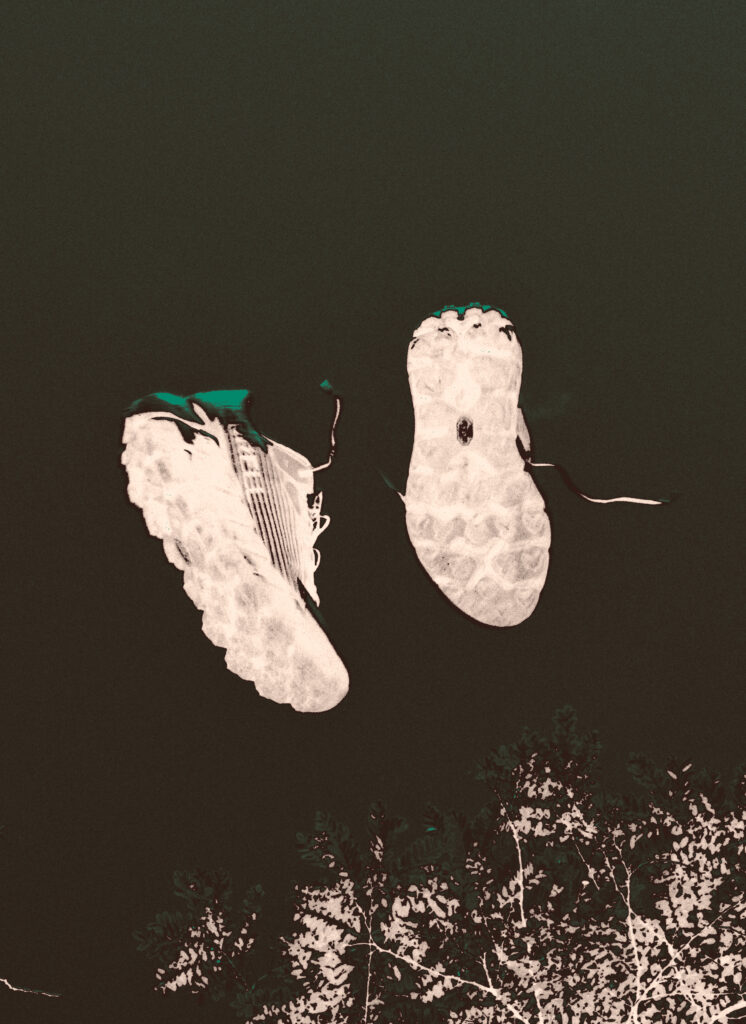
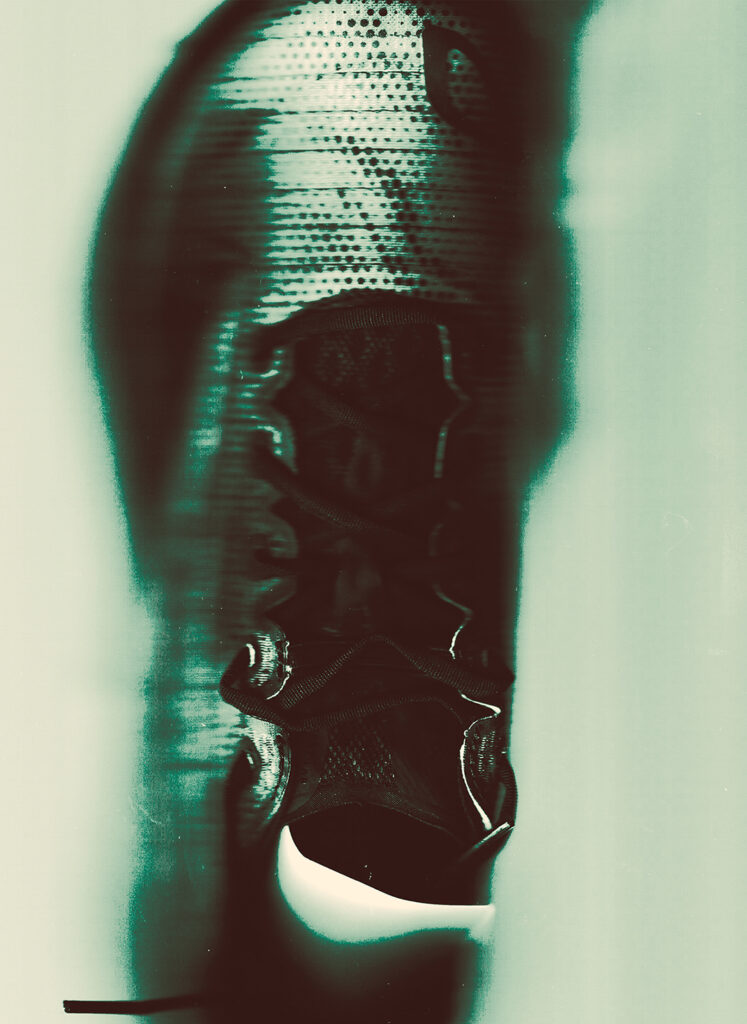
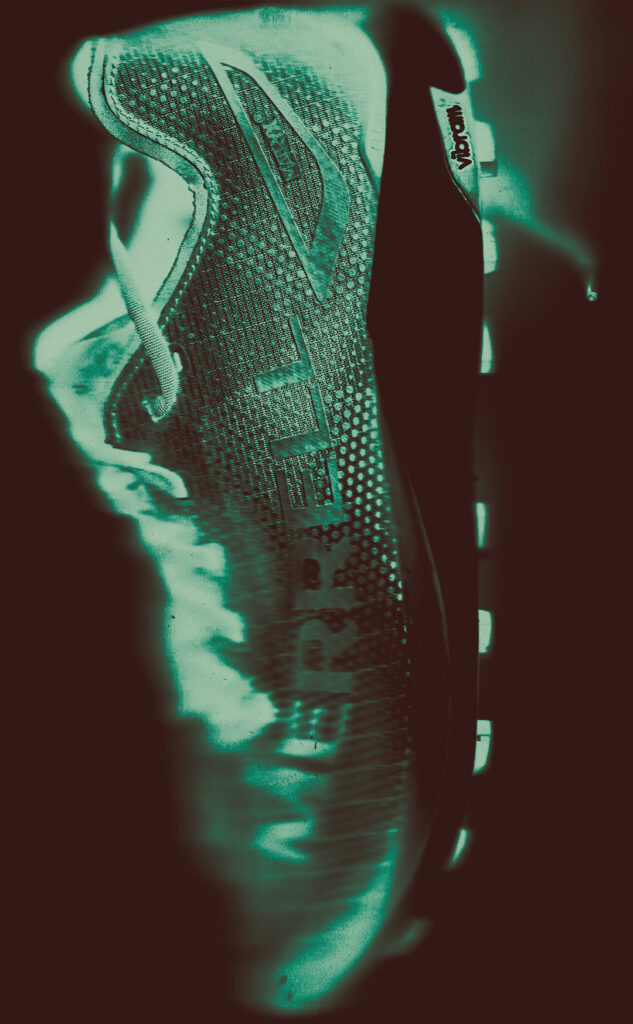
I'll let Jon talk more about what MTL is, but from a differentiation point of view, MTL is a celebration of our pinnacle, award winning innovation in trail running. With this season’s collection, what we've done is dress MTL silhouettes for the Merrell 1TRL consumer who cares about performance. I was very conscious of not changing the technical aspects of the shoe for the sake of aesthetics. We've just dressed the same shoe in a different outfit.
Jon:
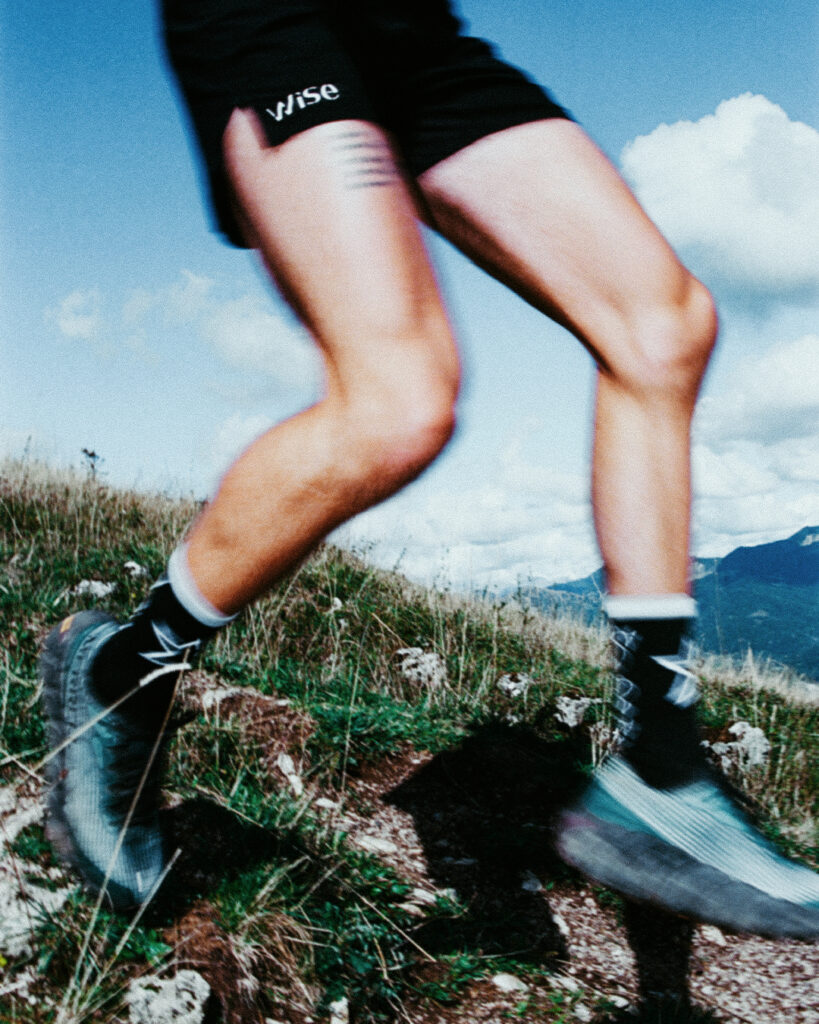
We use a lot of different words, but MTL essentially is a conversation we have with our sponsored athletes that turn into more refined places to bring innovation to solve their needs. MTL, Merrell Test Lab, is trail shoes. We do testing on treadmills and in labs, but it's so hard to test trail products in a static environment. The shoes have to be tested out on the trails. We call it Merrell Test Lab but the lab really is the outdoor space.
For both 1TRL and MTL, they're focused and organized brand driven ideas that can house the shoes both Paul and I want to make. When you're in this industry for a while, what often happens is you start making what drives the business and every single shoe has to have a certain number of pairs behind it. You’ll start loosing the nuances, the strategy or the passion behind styles that only sell in small quantities. Both, MTL and 1TRL, are a great place to house our innovation, legacy, and understanding.
When we started MTL, we only had two or three athletes, it was really simple. We were asking them what they needed to succeed in the environments that they were competing in and made shoes for each athlete individually. Now we have about 40 athletes globally, so it's become more of a theme.
We are sponsoring the Sky Run World Series and we have a lot of Sky Run athletes, so we better have a great sky run shoe. The theme for us was: how do we make some of the best sky run shoes on the planet? And that's where you see the MTL Long Sky 2 and the MTL Skyfire 2. That's really what MTL is. It’s an opportunity to engage and develop with athletes. We don't release something from MTL that isn't validated and directly talked through with athletes. At the end of the day, MTL drives innovation for the entire brand.

APR MAG:
And now for the very first time, Merrell has combined the two lines, MTL and 1TRL in the MTL Adapt Matryx and the MTL Long Sky 2 Matryx. How did this fusion come about?
Paul:
From my background, knowing that innovation always excites consumers but also being a fan boy myself, I’m always asking Jon what he is doing and checking out his product when I'm building the 1TRL range. That’s the foundation.
When we did a preview at Paris Fashion Week in January of just the MTL line, everyone was super interested in it, but obviously it was made in athlete colours because that's what it is. As Jon said, it's designed for athletes. It's always brighter colours because you’d want the shoe to stand out at the starting line and on the trail. Even when it's covered in mud, you’d want the colour to come through so you can see what the shoe is.
If you think about the consumers we're bringing to the brand via 1TRL, they come from the fashion or sneaker world. They're used to having a certain look and shoes in neon yellow and orange don’t mostly fit in their aesthetic. That's where Jon and I started talking about combining MTL and 1TRL. We wanted to see it as a yin and yang, so they can sit together and support each other. The inline ones and the ones you’ve mentioned are celebrating our innovation and making it while having a niche focus, making it accessible to everyone who’s interested in it. It's about keeping the doors open for everyone who wants to engage with it.
APR MAG:
So is it ultimately a combination of 1TRL aesthetics and performance and innovation from MTL? What is it that these two can learn from one another?
Paul:
Exactly, that's it in a nutshell. And all due respect, it's Jon who leads on this because it's celebrating the innovation. All the designers and the team's work to make the product great comes first. Then I put it in a nice outfit, so to speak.
Jon:
I think you nailed it. In a nutshell, it’s the color understanding from 1TRL and the innovation, the silhouette, and the performance needs from MTL. As we go forward, what I'm seeing is athletes wanting to have the same sophistication off the trail or off the course, so I don't think they have to be mutually exclusive anymore. We’re at the intersection of high level innovation and athleticism with the colors rooted in Merrell 1TRL. As a brand, I would continue using the synergies between the two. Not so they become the same, but so that they're like an intersected road. Not so you can't see any difference between them, more so it's a seamless progression about what you want to wear, how you want to wear it and where you want to wear it.

APR MAG:
To me, this sounds like the perfect combination of aesthetics and innovation. One could argue that for the future you should merge 1TRL and MTL, so you don't need two separate product lines anymore?
Paul:
It may as it grows. When it started out and correct me if I'm wrong, Jon, MTL was literally three shoes. It was one model in one color and it was for the athlete. We started it the right way in making sure the athlete was supported and one day the shoes were award winning. Now, we wanted to open the doors to share this great product with a slightly bigger audience. As you know, with any brand growth, it's about managing and doing it right. Today, the MTL line is way bigger than three. That's more options for people to be involved with. We're working on going forward where there's one shared color that everyone within classic MTL distribution and 1TRL distribution can share. Then there's an MTL only color and a 1TRL only color because it's keeps people interested. We can still market it in various ways as a brand without having everything accessible everywhere, so we can still create consistent interest. It's still evolving and like I said, this is the first season. Going forward, it may become this one thing that we offer.
APR MAG:
What were the difficulties or challenges in combining these two product lines? I imagine you probably have had dozens of discussions.
Paul:
I think me and Jon were pretty much aligned. As you bring other people and departments in, they raise questions whether and to whom we can offer this to. It was more about distribution and whether for example an athlete colorway could sit in Dover Street Market and how we would market it. Since the line is still small and tight, we can be quite nimble around how we address it. We don’t have a rule book to play by. It's a very exciting stage and we're feeding off the reaction that we're getting from our customers, there’s a lot of excitement to it. We're evolving with our innovation but also with feedback to make sure that we're nurturing it in the right way.
Jon:
Yeah I agree. It's a lot of behind the curtain difficulties.
APR MAG:
Would you maybe lift the curtain for us?
Paul:
It’s been mainly about different viewpoints. Some people said the shoes shouldn't be in 1TRL distribution. Other people thought we should be offering this more to more accessible fashion accounts. For everyone, it's always been about keeping its purpose and value. Not all perspectives can always align. It can be a dangerous thing if you have too many opinions on what you’ll be doing. I always give this story: imagine you would create this nice colourful cube that's got really sharp edges and just looks beautiful. As you pass it round the table, everyone takes a little bit of the edges. By the time it gets back to you, you've got us a round ball of safeness and I don't like that. We're just managing that and like I said, it's all exciting and important for us as a brand.
Jon:
The further you get away from where you’ve started, the more you have to be diligent of saying: when we started, it was this. As we move forward in both of these directions, I'm thankful that we're moving closer. I can say today we're moving closer because we're purposely making colors and some of the patterns the same way and we're sharing minimums and quantities.
I think some of the difficulties were in what we expected MTL to be. There was this stereotype of having to be so athletic that you would never even be able to put it in Merrell 1TRL. That's not the truth because the consumer may it want and vice versa. There was a thinking that if a shoe came in triple black, no athlete would ever want it and we as a brand would never want to see them racing in it. These stereotypes have been debunked by other brands consistently, year over year.
For us, it’s about making sure that we're not trying to protect it too much as what it “has to be”, that we’re allowing these things to intersect. I would love to see it become unified, maybe even a single line. I'm not saying it will, but I would love to see a 1TRL expression on both sides. There's a level of athleticism that some of the 1TRL shoes could have and need, and then there would be a new level of wearability for MTL. It's all good as long as we're moving closer together.

APR MAG:
Merrell obviously has a super rich history as a trail brand and trail running is becoming more and more important. In the future, how do you want to position Merrell as a whole but also specifically 1TRL and MTL?
Paul:
1TRL is pinnacle product for pinnacle distribution. Within this range, there's a guiding line between pinnacle innovation and pinnacle in terms of premium materials and executions, which tends to lean more on what our iconic product is. We've made some amazing shoes in the past, but some absolute bonkers shoes as well. There has to be a balance. It can’t be merely performance led product because it shuts the doors on welcoming some people in. But also, it can't all be heritage product because then you lose this other important value of the brand.
For the future, the 1TRL arrangement will always be built around certain buckets. There’ll always be Moab product, there’ll always be Jungle Moc product, there’ll always be MTL product, or Hydro product. That’s what has been there for years. Super recognizable but with fresh takes and premium positioning. There's still space for some new product. We will be launching a new Agility Peak next year. There's a 1TRL take on that. As I said, it is and will be a celebration of the brand in an elevated distribution.
Jon:
As a brand, we've always been approachable, allowing people in to the brand quickly and early in their outdoor journey. There is some product that’s a little more technical or a little more advanced, but this balance of making sure that we're welcoming a lot of different people from a lot of different areas and backgrounds into the brand is crucial. There's a level of technicality or sophistication that we sometimes might lean too far into, but I think the same is true the other way. If you lean too much into approachability and simplistic understandings of the outdoors, you may get off the innovation path. It's a balance.
Paul:
It's very much about empowering people to go outside. That is at the heart of the brand. Empowering people by equipping them to go outside - whatever their version of outside is.
APR MAG:
Thank you, Paul and Jon.