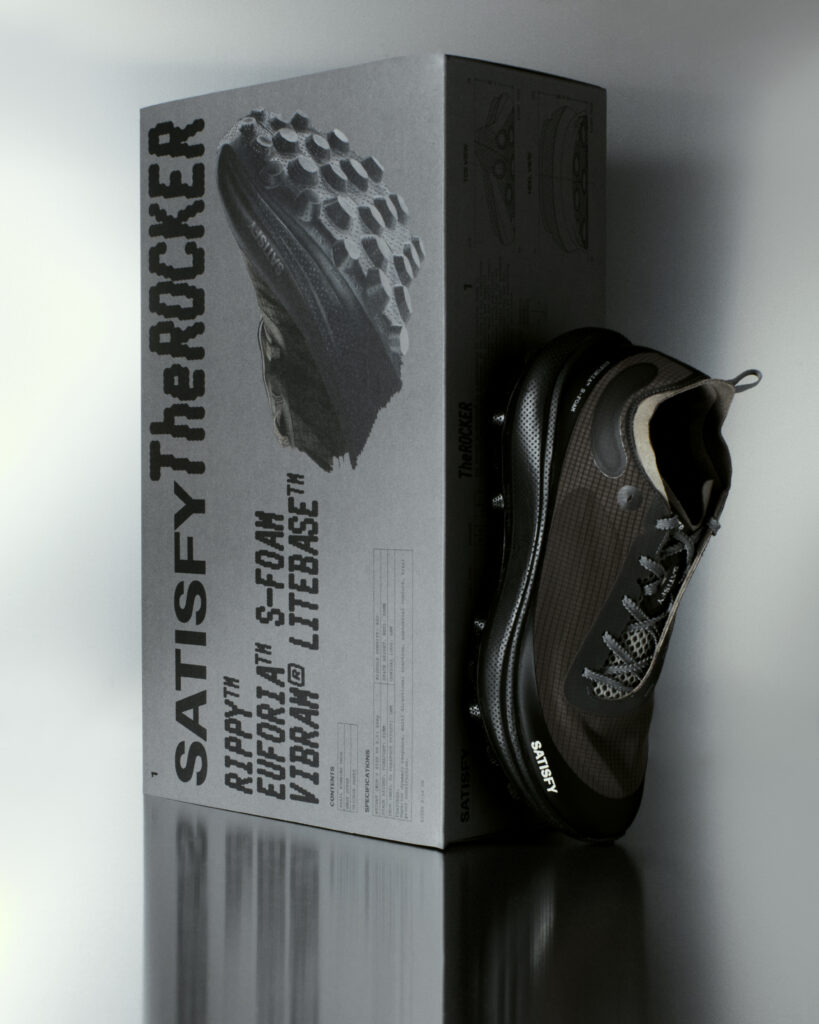
Jean-Marc Djian, SATISFY’s Vice President of Footwear, began his career as a professional ice hockey player, representing his country in two Olympic Games. As a goalie, he enjoyed the freedom to combine his athletic career with academic pursuits. After retiring from sport, he transitioned into the outdoor and performance industry, leading footwear at Salomon and later building The North Face’s footwear division in the United States. His unexpected connection with Brice Partouche, SATISFY's founder, eventually led him to join the brand and develop its first-ever running shoe, TheROCKER.
APR MAG sat down with Jean-Marc to talk about the technical details of TheROCKER, it's philosophy, it's unique details and how it was inspired by drifting RC cars.
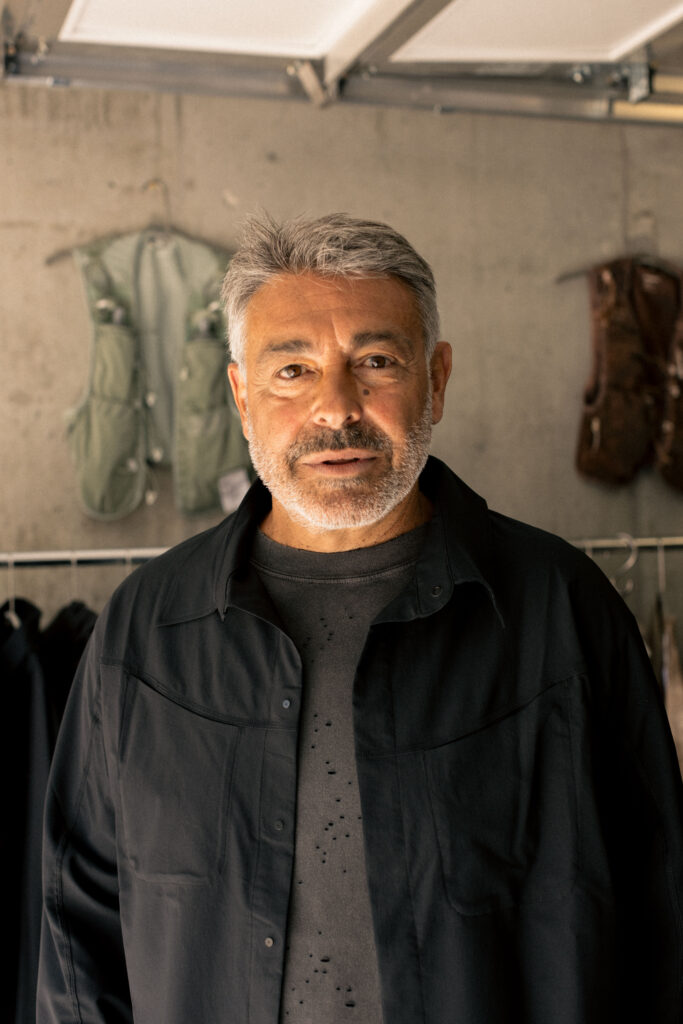
APR MAG: Hey Jean-Marc, SATISFY's first shoe, TheROCKER, is about to launch. Let’s start with the pink elephant in the room - why shoes?
Jean-Marc Djian: SATISFY is fundamentally a cultural brand. It originated from skate and snowboard culture and evolved into running. Brice founded the brand because he couldn’t find running apparel that matched his identity. From the outset, SATISFY has connected culture with the world’s most universal sport: running. The silhouette has always been central to his vision, and footwear is a natural extension of this. To be credible, you need to offer the full look, from apparel to eyewear to shoes.
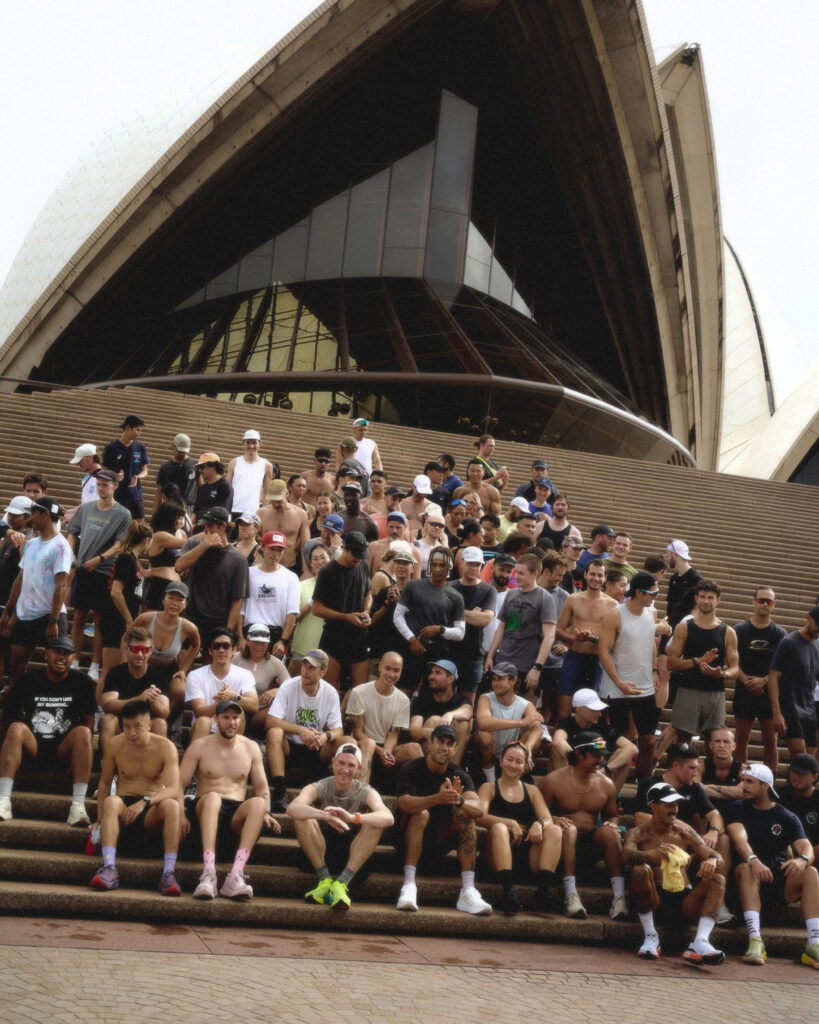
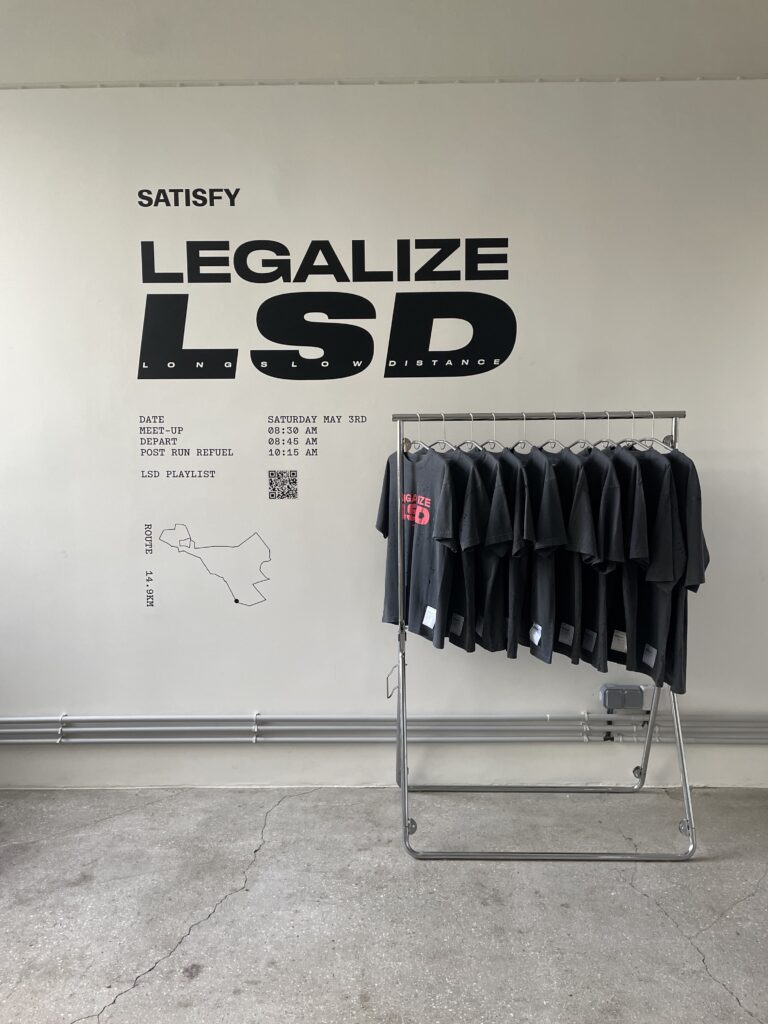
The success of our LSD runs - monthly community runs organized by SATISFY in various cities worldwide - highlights that our community shares our desire for a curated combination of performance and culture. Many great shoes exist, but few merge deep technological expertise with cultural significance. Every detail of TheROCKER reflects this balance: beautiful yet challenging to achieve.
APR MAG: So TheROCKER is the cultural expression of a certain lifestyle of a specific group?
Jean-Marc: Absolutely. It is a statement. Footwear says a lot about a person’s lifestyle. I have an obsession with noticing what people wear on their feet, it tells a story. TheROCKER merges high performance with cultural expression.
When Brice briefed me, he outlined the rationale first. From there, he crafted the story, which elevated the product beyond performance. At SATISFY, there is no boundary between performance and lifestyle - they coexist and feed each other. TheROCKER embodies this philosophy.
APR MAG: Obviously you have a huge amount of knowledge to built on, but with SATISFY you’ve started designing a shoe from scratch. Could you walk us through that process?
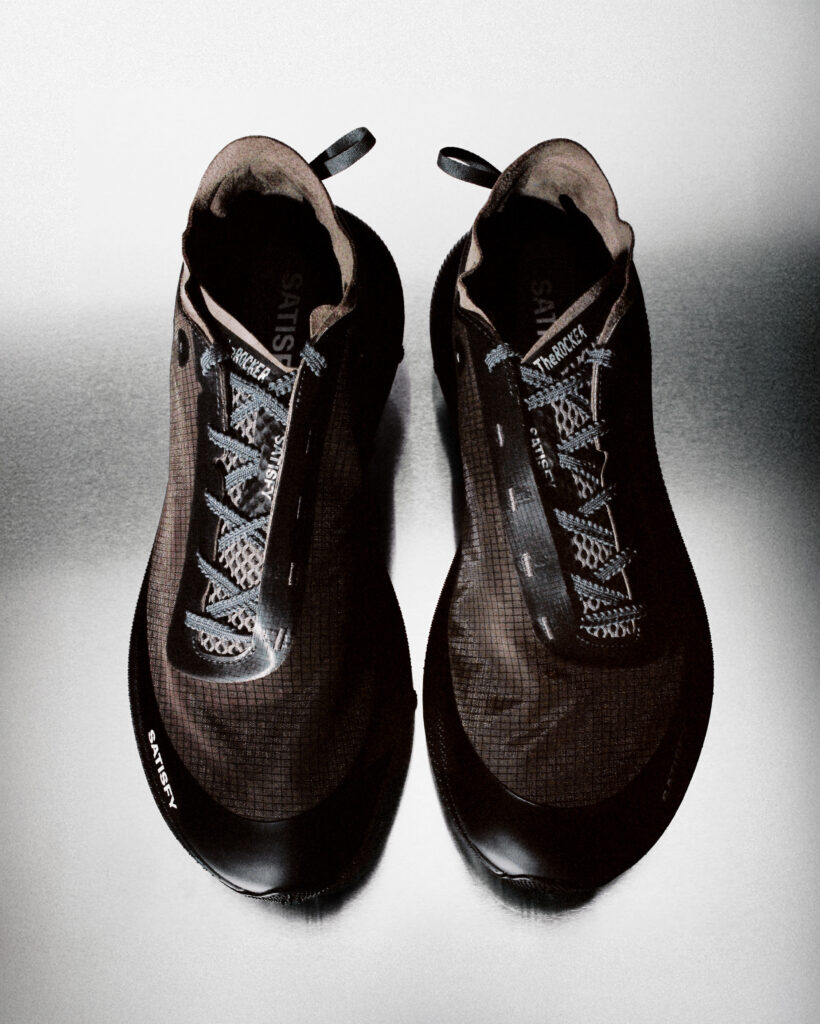
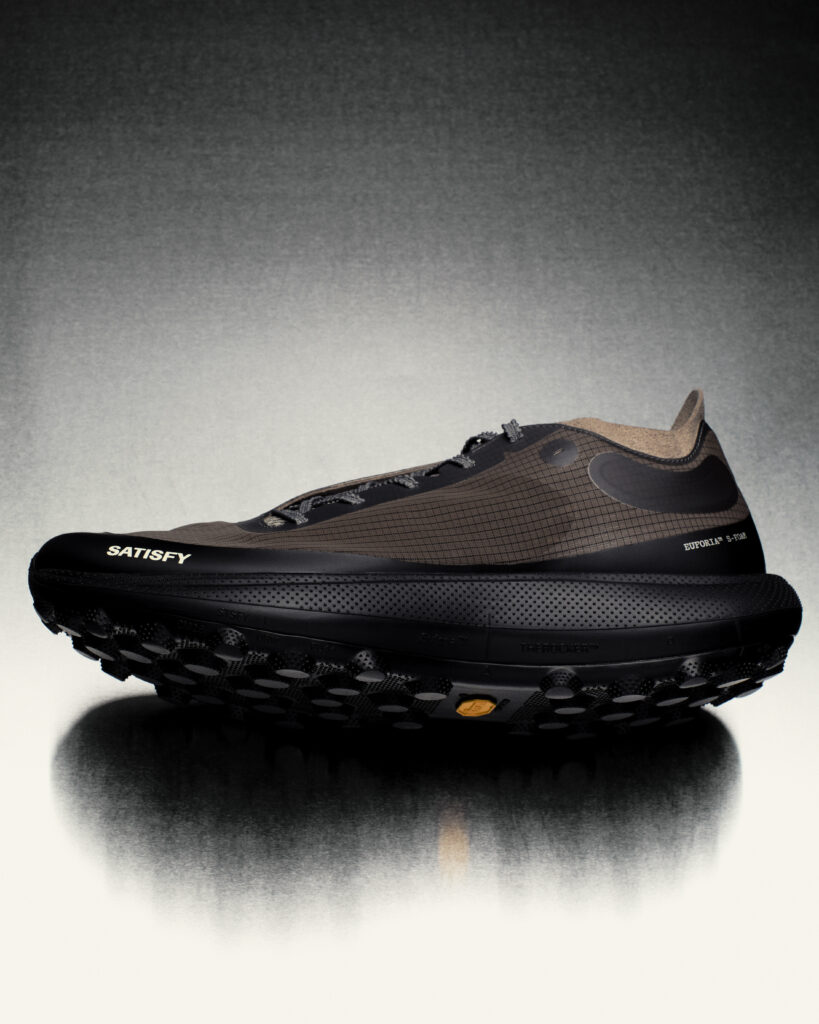
Jean-Marc: It began with Brice’s vision. Protecting this vision is essential because he is always ahead of the curve. His early sketches already showed the Rippy upper, asymmetry, and spacious forefoot, all key to the final design. TheROCKER was conceived as a “concrete-to-mud” shoe, built for 90% of trail activities. Brice wanted the step-in comfort of a road shoe translated into a trail model, blending his personal experience with the brand’s design DNA.
APR MAG: Once you had the sketch and the idea of the final shoe, what were the stages in between and which challenges came with it?
Jean-Marc: Developing TheROCKER meant rethinking every component from scratch. The upper was particularly complex - we created the Rippy™ 66 Monomesh, starting from the yarn to achieve a fabric that combined breathability, durability, and softness. This required finding a supplier willing to take a risk on a completely new material.
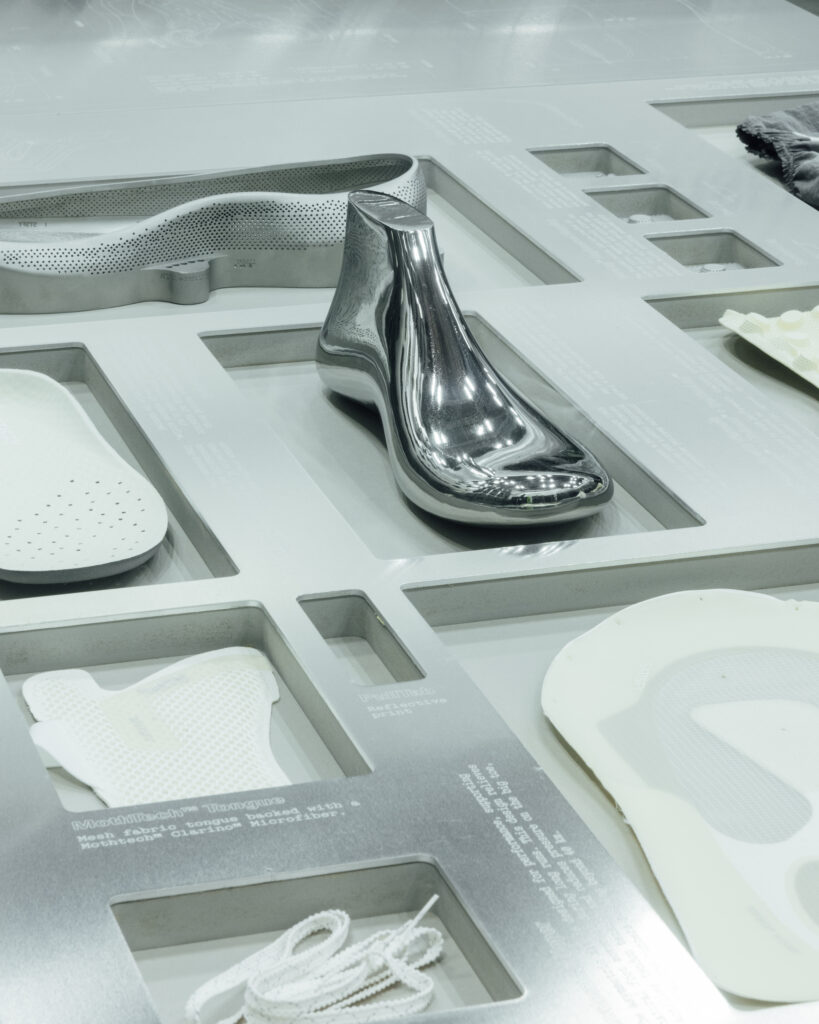
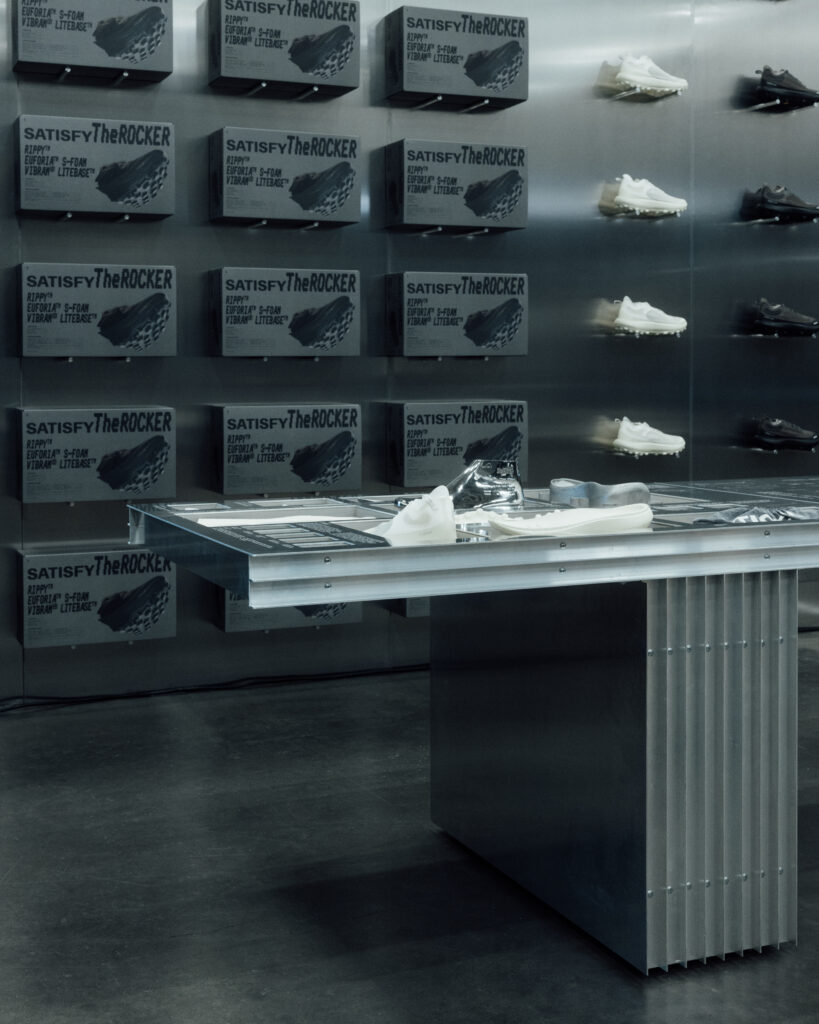
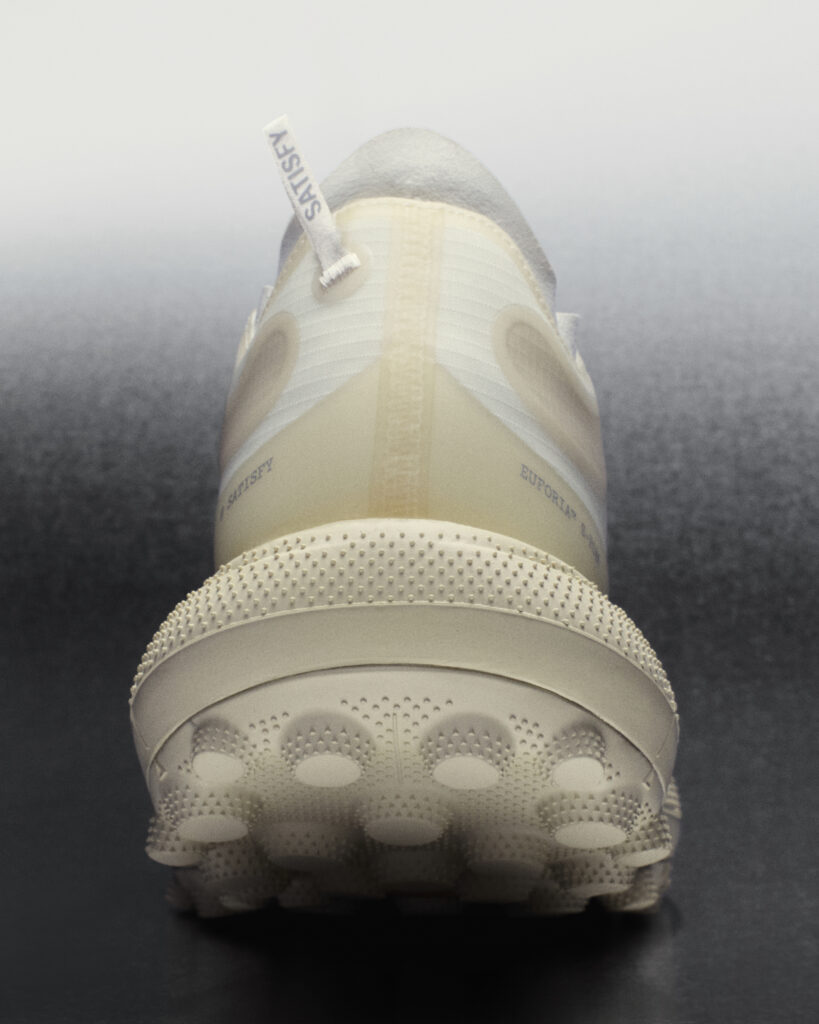
For the midsole, we engineered Euforia™ Foam, our proprietary PEBA/EVA blend, balancing energy return, stability, and durability. To maximize its potential, we adopted aluminum-injected 3D molds, a technology rarely used in production, which allowed us to perfect both the performance and the finish of the shoe.
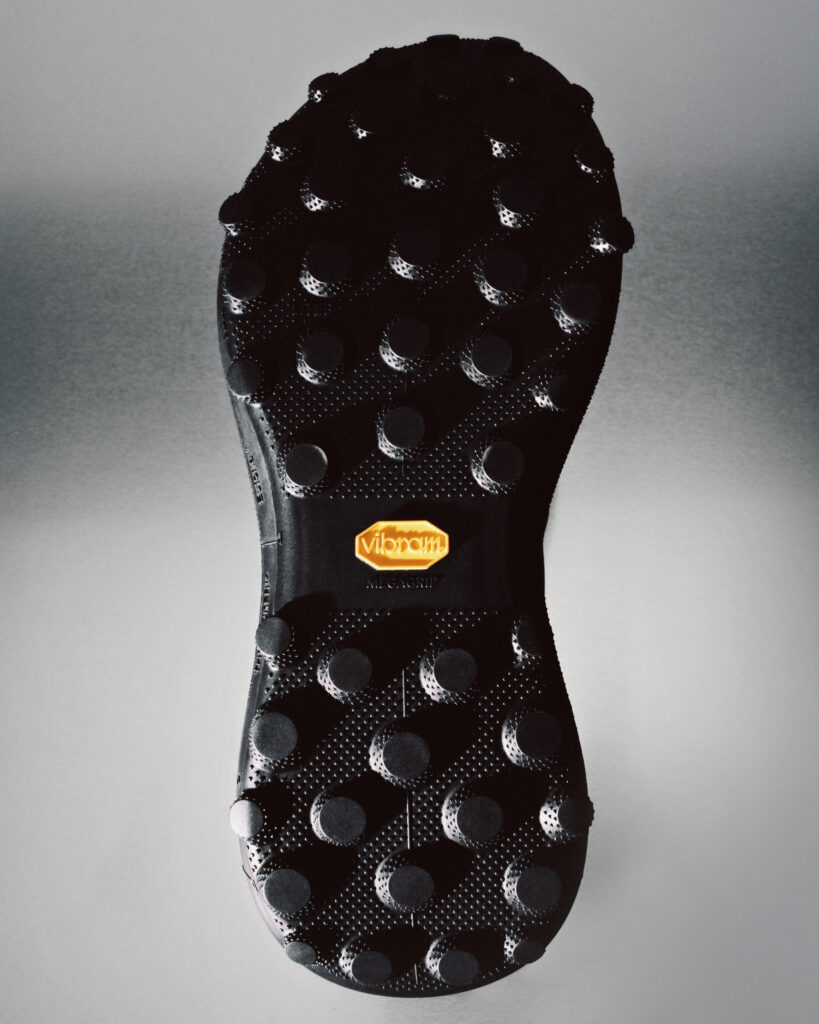
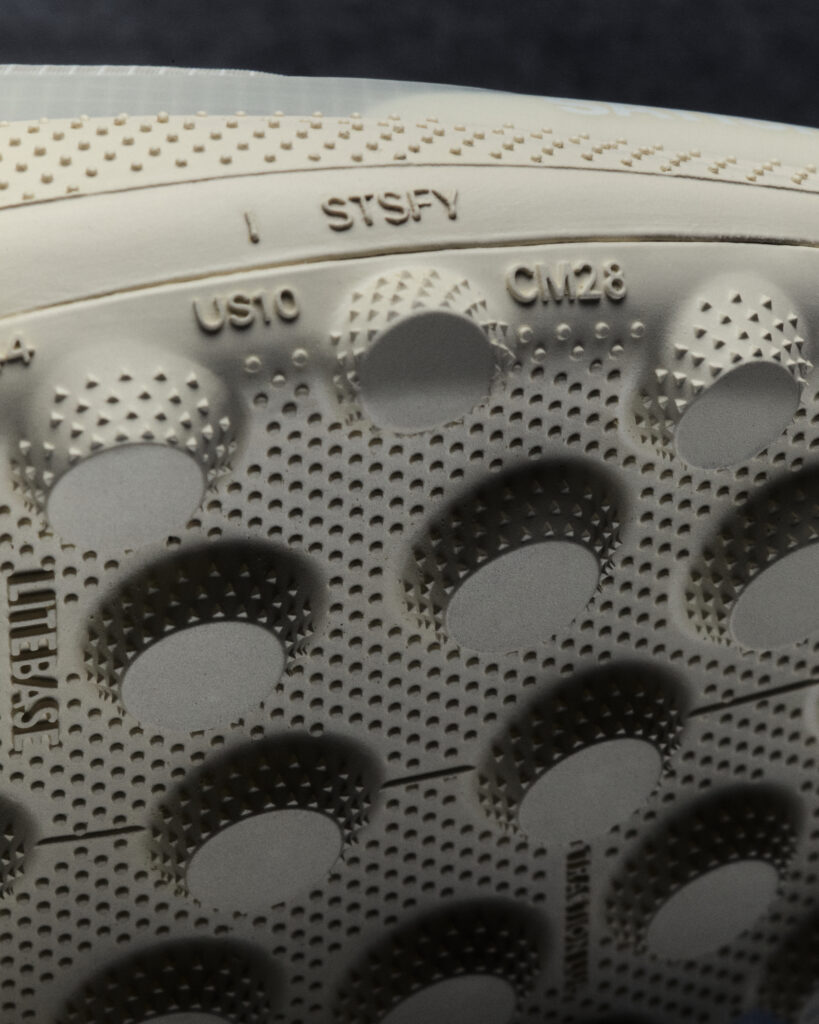
We also collaborated with Vibram on the TuneLug™ outsole, which went through multiple rounds of testing to validate its grip and dynamic control. Each stage demanded innovation and perseverance, but the results exceeded expectations.
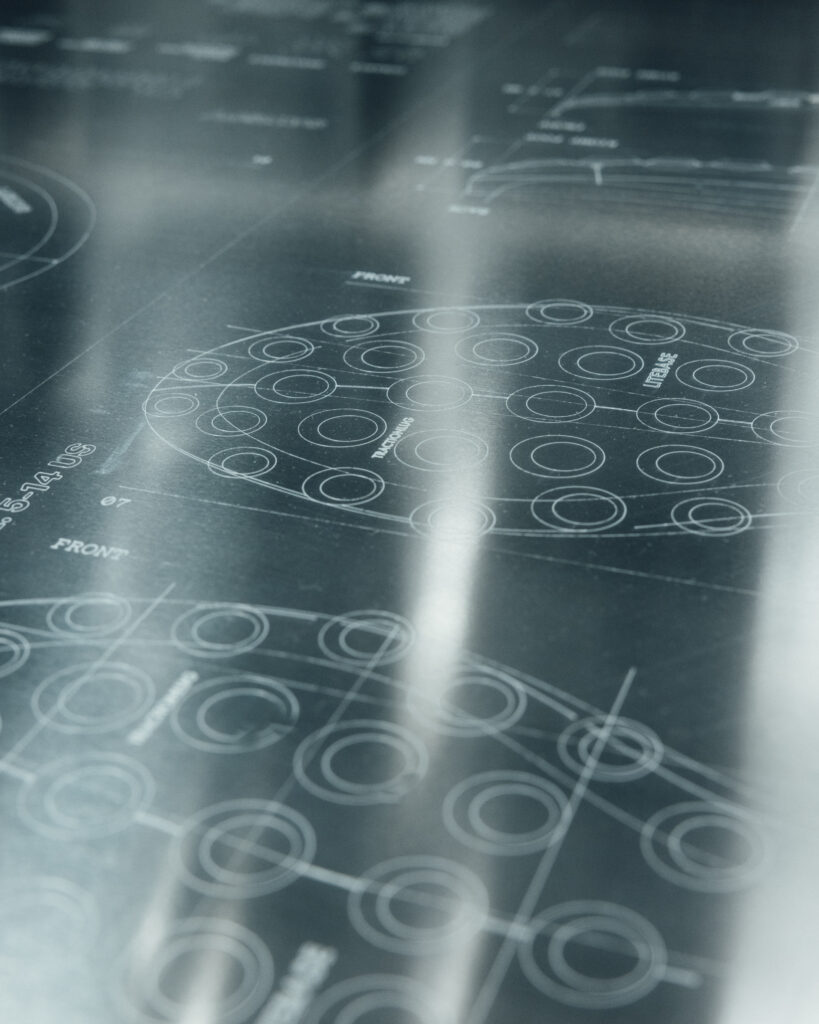
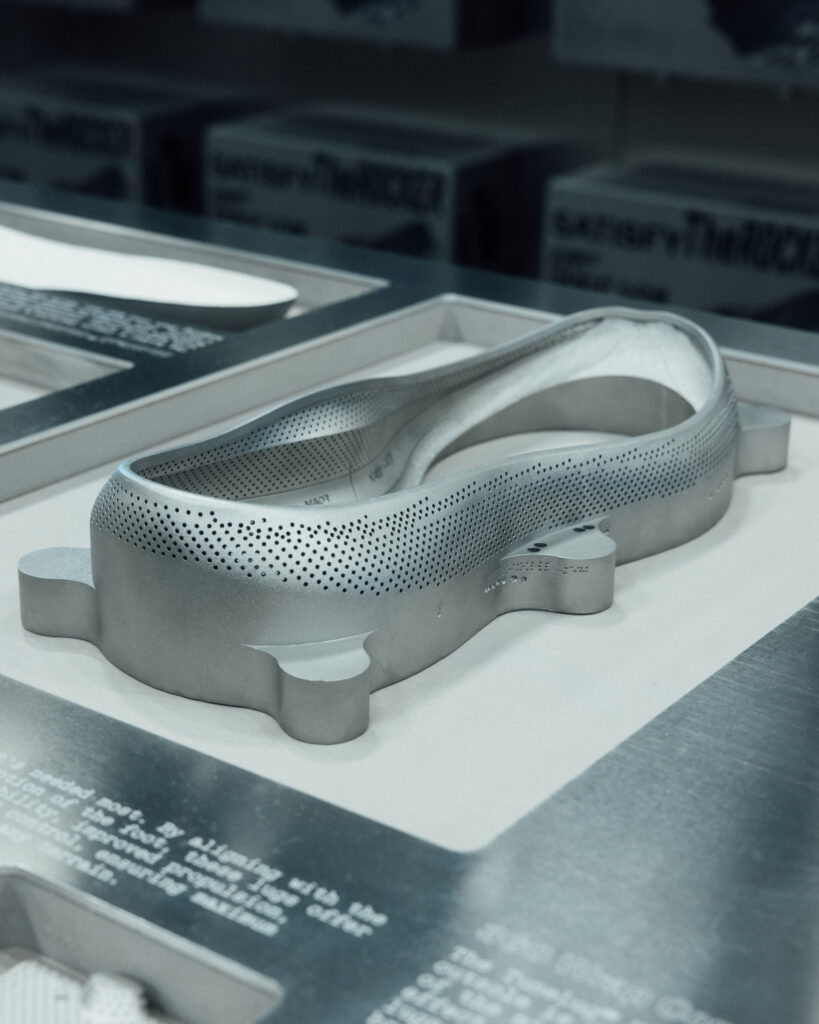
APR MAG: Let’s talk about the TuneLug outsole and the aluminium molds in detail. Why did you go into this direction specifically and why does it work best for TheROCKER?
Jean-Marc: As for the TuneLug™ outsole, its circular lug pattern - originally inspired by Brice’s RC car tires - was designed to offer progressive, controllable traction on various surfaces. The combination of its geometry and Vibram’s rubber compound resulted in exceptional grip and responsiveness, earning the trust of testers who were initially skeptical of SATISFY's technical credentials.
APR MAG: Let’s move on to the midsole. Why did you specifically choose this PEBA-EVA blend and why the stack height of 27mm in the forefoot and 32 at the heel?
Jean-Marc: First, in term of process, we decided to use aluminum-injected molds. It came from our need to fully harness the properties of Euforia™ Foam. Unlike traditional steel molds, aluminum allowed us to achieve a sharper definition, improved rebound, and the distinctive dotted texture of the midsole. The blend of PEBA and EVA ensures both energy return and durability. Trail shoes must withstand gravel and rocks while offering comfort and bounce. Our testers ran over 700 km with TheROCKER, and many wanted to use it for races right away.
The stack height - 27 mm at the forefoot and 32 mm at the heel - was chosen to suit a wide range of practices. It offers comfort and energy return without becoming overly specialized. We designed a shoe that works for most runners’ needs.
APR MAG: You've touched on the cultural references before. What is it that stands behind the name and the design of the shoe?
Jean-Marc: Every detail of SATISFY is rooted in culture. Our athletes and community share this deep cultural awareness. For example, when David Lynch passed away, all our athletes paid tribute without any direction from us - it’s just who they are. Possessed magazine, our cultural platform, rarely discusses products because we prioritize culture over commerce.
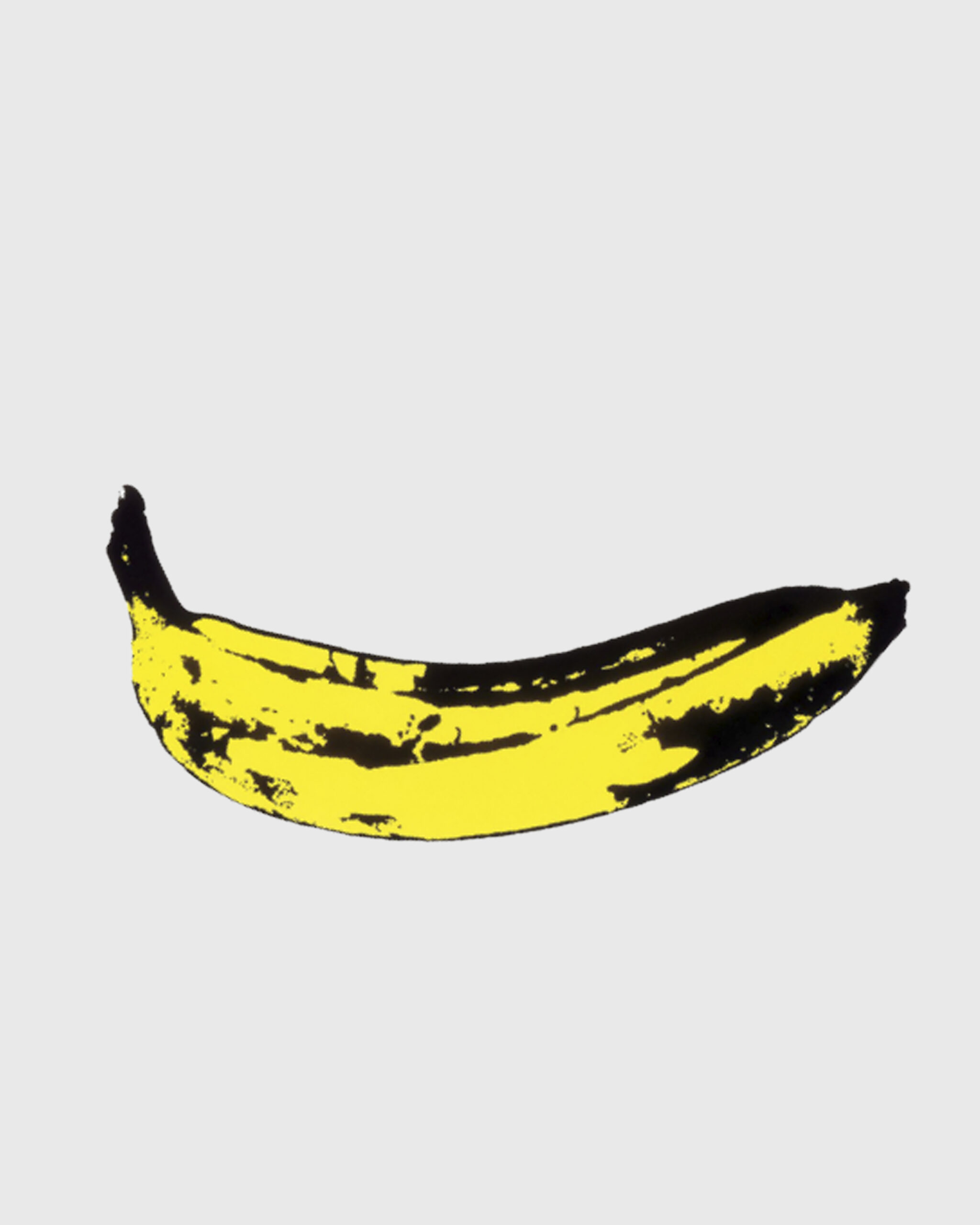
TheROCKER’s shape reflects this philosophy. Inspired by Andy Warhol’s yellow banana, its design naturally led to the name. Internally, everyone was already calling it TheROCKER.
APR MAG: Since this is now the first step into footwear for SATISFY, what's next?
Jean-Marc: The priority is a successful launch. We aim to equip our community from head to toe, but with intention. Instead of producing large ranges, we will create only a few new models, each carefully designed to enhance the lives of our community. Not everyone is a runner, but they share a cultural mindset we want to support.
APR MAG: Once you make what you really want to wear, you don't need to try to find the perfect shoes - you just make them yourself and you'll be happy with that one pair.
Jean-Marc: Exactly. Brice started SATISFY because he couldn’t find running apparel he liked. Within two weekends, him and Kotaro – SATISFY’s Chief Design Officer - created most of the brand’s current styles and debuted them at Fashion Week. TheROCKER follows the same philosophy - make what you want to wear, and others will connect with it.
APR MAG: Thank you, Jean-Marc.