
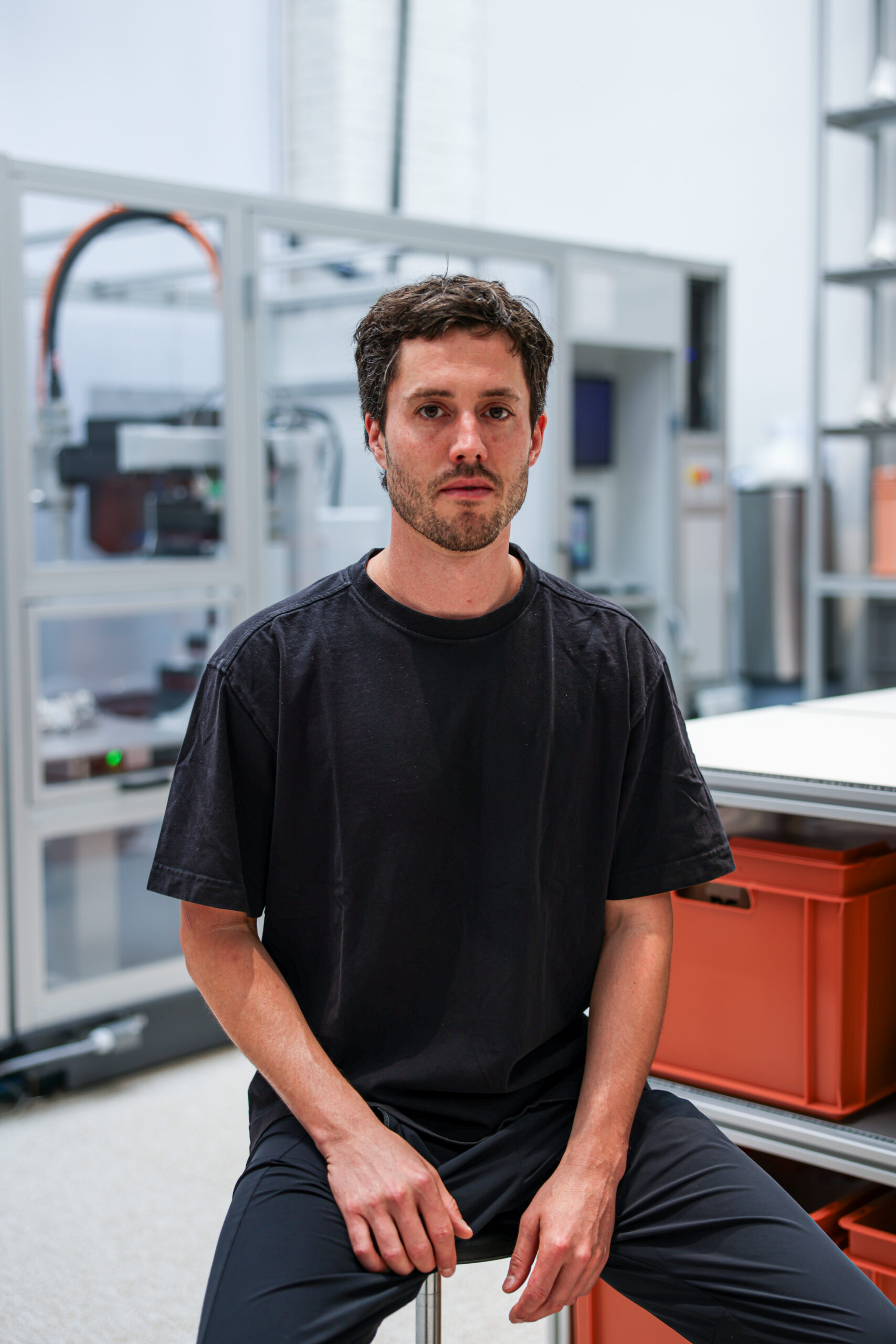
When Johannes Voelchert began his bachelor thesis, footwear wasn’t on his mind. His focus was on production processes - how they work, how they can be subverted, and how they might be repurposed. The project was titled “Hack a Process.” His brief was simple: take an existing manufacturing method and transform it for an entirely different use case. At the end of his journey, shaped by long periods of experimentation and development, stands On's Lightspray™ technology, an entirely new and innovative process for producing mono-material and ultra-lightweight running shoe uppers by using specific spray patterns. While the ultimate impact is still unfolding, the originality of the approach could mark a turning point for the industry, forcing a fundamental rethink of how traditional uppers are made.
The idea for his project came in the most unlikely setting, a Halloween party. An artificial spider web, hanging in a corner, had been created using the filament of a hot glue gun. When he saw the web, something clicked. He saw some kind of potential in those ultra-fine threads.
The core of his project was an overlooked phenomenon. When a hot glue gun is switched on but idle, it releases a thin, string-like waste filament as it’s moved. He began experimenting, started playing around, noticing that filament coming out of the gun when moving the working gun from one place to another should not only be seen as waste, but as structure. As material. As textile.
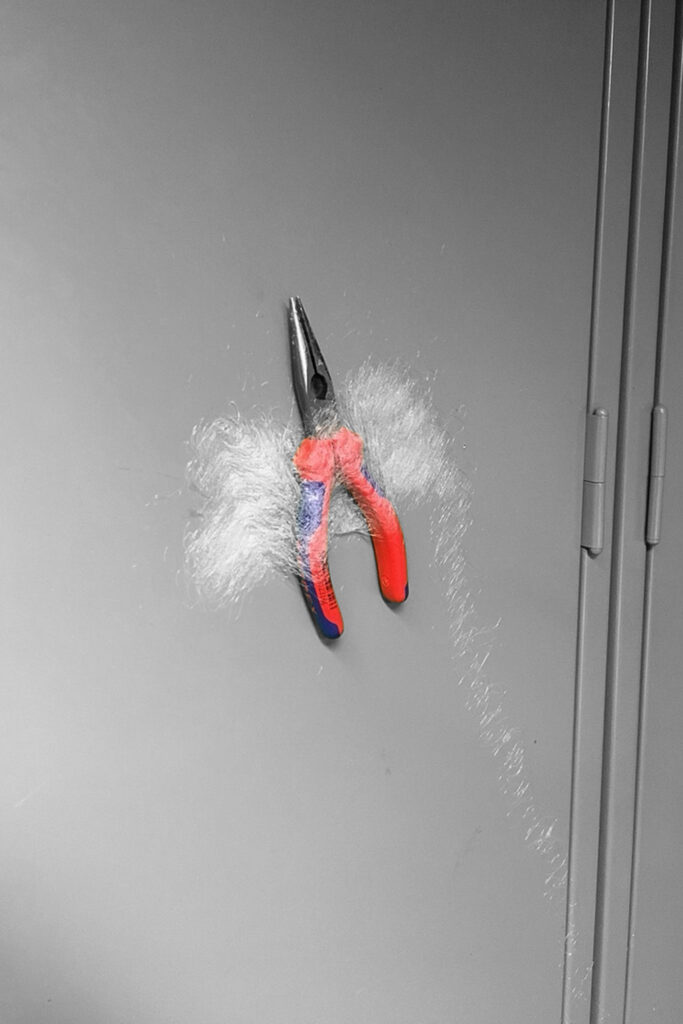
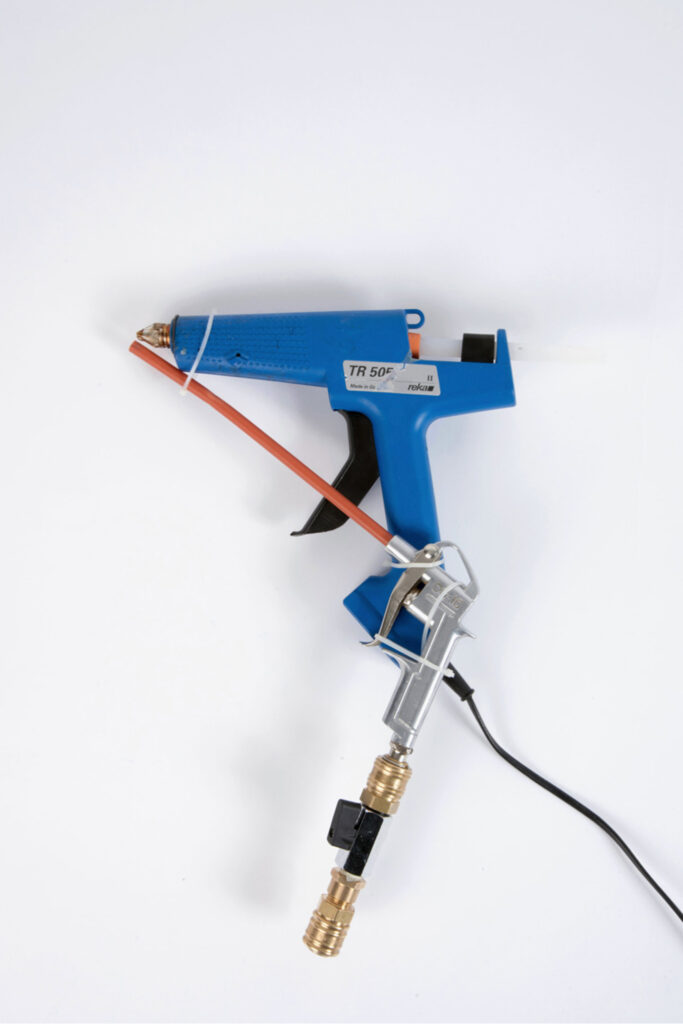
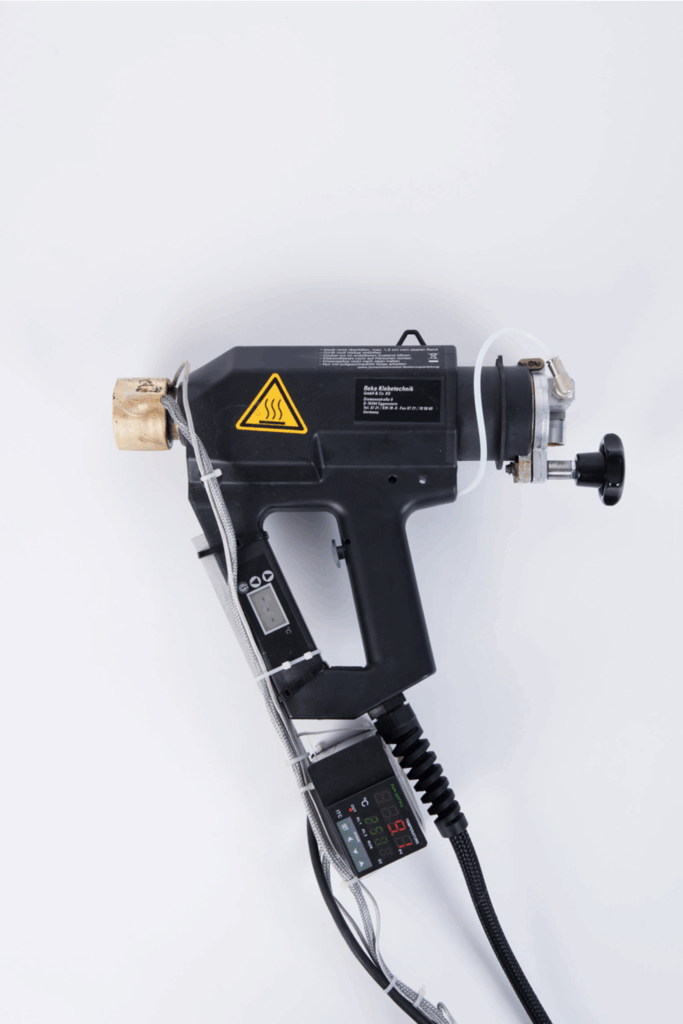
Johannes engineered a specific airflow system that continuously pulled this exact thread outward constantly, turning accidental byproduct into controlled output. He tried to find ways to modify his hot glue gun so he could create garments, to stick something onto a wall or spraying filaments onto tools. He didn’t yet know what the final application would be, but he did realize one key capability: he could precisely coat existing forms.
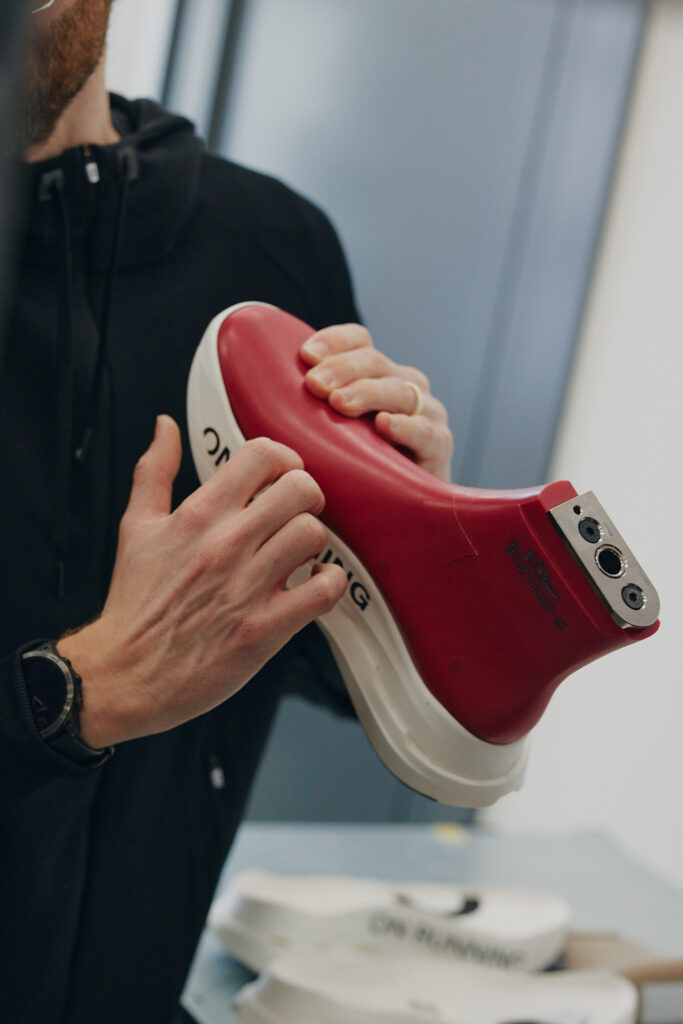
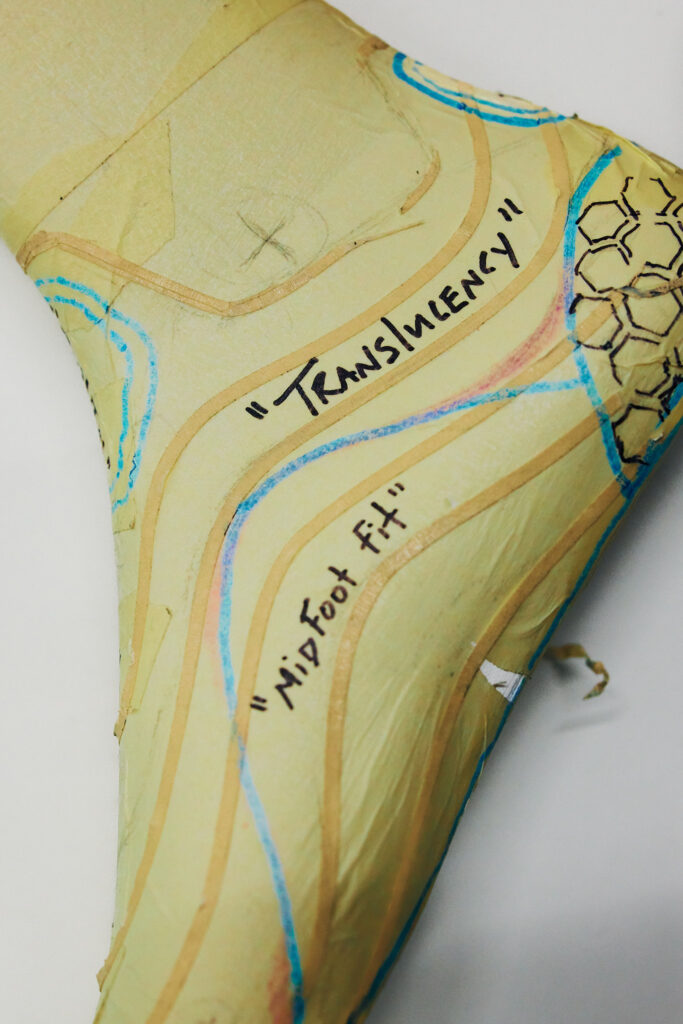
It had been this realization, that led him to a shoemaker. Johannes borrowed one of his lasts, the anatomical form used to shape shoes, and began spraying filament directly onto it. The result was crude but promising: a fully coated upper, formed without seams or yarns.
When Marie Georgarakis joined On in 2022, they already were working with a spraying robot. The company had begun experimenting with spray processes two years earlier, in 2020. Still, the spray pattern proved especially difficult.
“There was no one you could hire for this,” she recalls. “It had never been done before", she says.
So the team worked the only way possible: experimentally. Prototype after prototype. Trial, error, iteration. No long concept phases, no bureaucratic bottlenecks; hands-on development, much like Johannes had approached his thesis.
At the end of his bachelor’s studies, Johannes stood at a crossroads: he either had to find a job or continue into a master’s program. Together with fellow graduates, he presented his spraying process at a design fair in Milan. Many people were interested, but no one really committed. So he returned home, uncertain about what would come next.
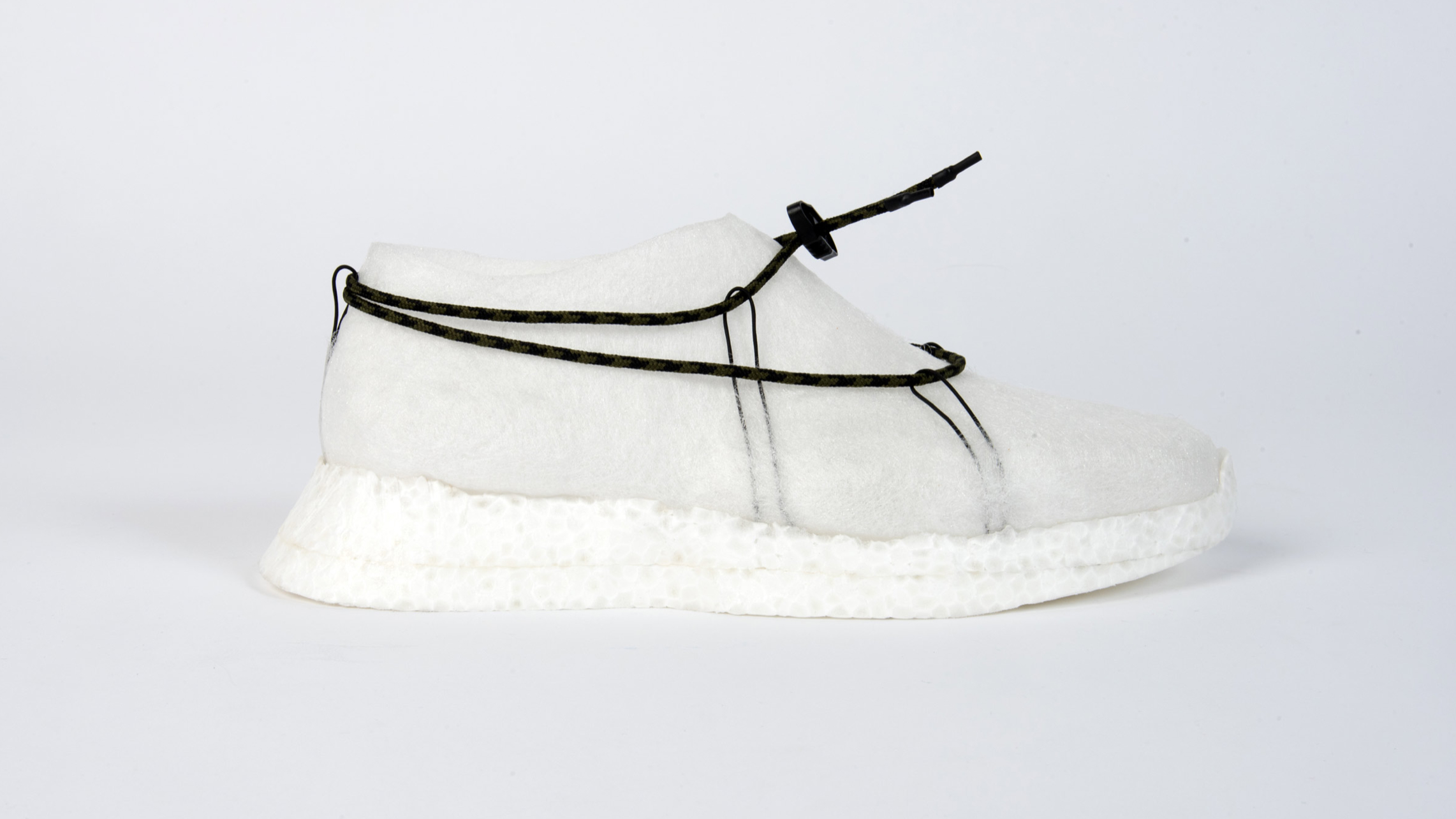
Shortly after, On’s innovation team reached out and invited him to Zurich. Johannes prepared meticulously. He asked On to send him one of their signature Cloud midsoles and packed his modified hot glue gun, filament, a last, and even a very first prototype. Before leaving, he visited his local shoemaker again, spraying filament onto a last and asking him to glue it to the Cloud outsole. This became the very first functional prototype he would present.
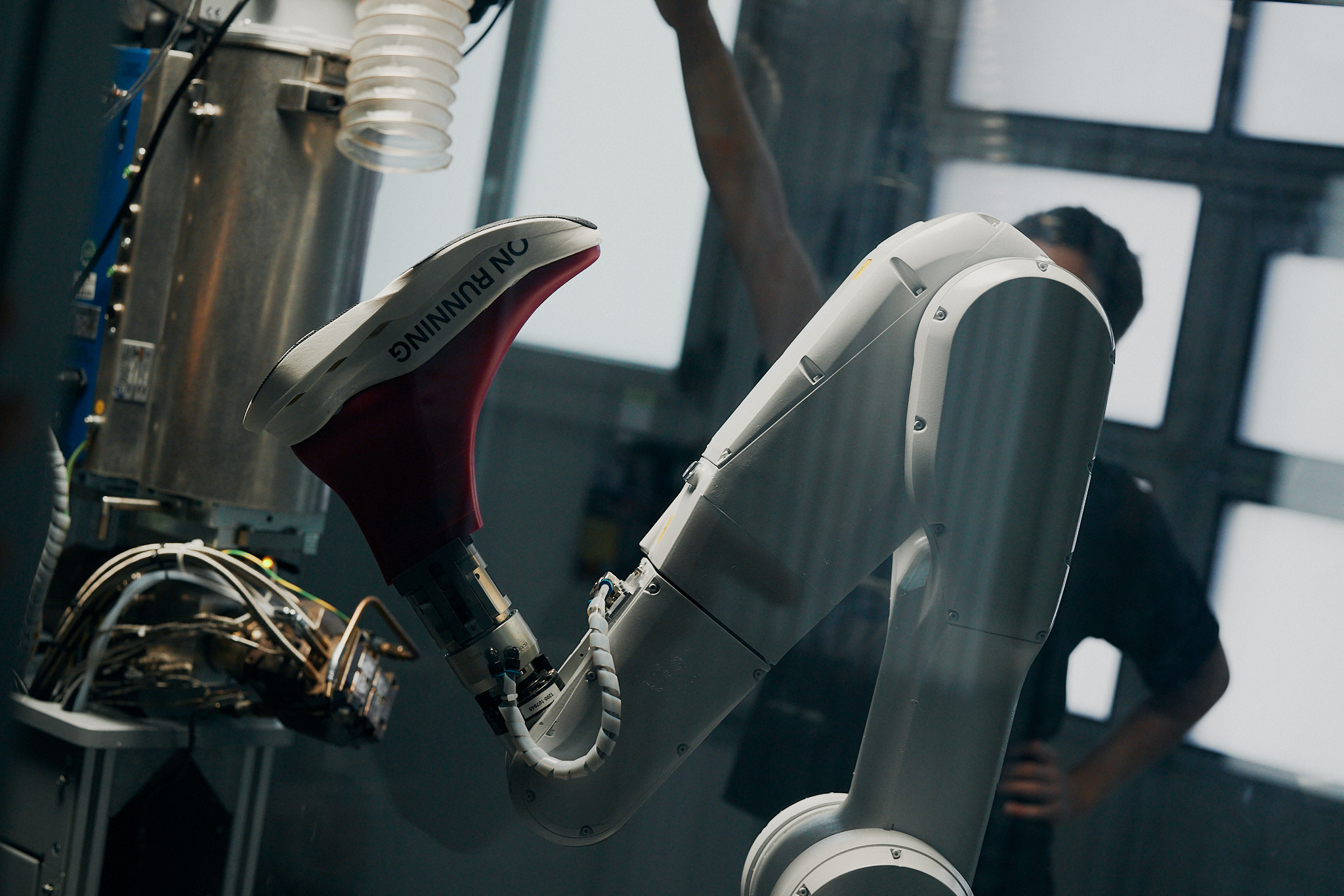
His presentation in Zurich didn’t start smoothly. The atmosphere was warm and welcoming, but when Johannes wanted to power up his equipment, it didn’t work. The cable he’d brought didn’t fit Swiss sockets. Once he managed to get the gun running, his mood shifted. The presentation started and the team was hooked. People gathered around, experimenting themselves by spraying phone cases. Johannes closed his presentation with his prototype and a photoshopped image: his modified hot glue gun mounted to a robot arm. This particular image captured his entire vision: fully automated sprayed shoe uppers.
After the meeting, his enthusiasm was high. But first, the project’s feasibility had to be verified. After On’s legal team conducted patent checks to ensure the freedom to operate, Johannes got the green light and officially joined the Swiss brand’s innovation team.
During the first phase of his work at On, Johannes partnered with the material manufacturer in Dormagen, Germany, to refine the system and adapt it for alternative synthetic materials. “As soon as you would say that you’re working for On, it got a lot easier”, he says. After extensive testing, they identified a viable substance.
No more hotmelt. No more adhesive dependency.
The resulting material, later known as Lightspray™, offered inherent elasticity. By controlling filament density, stiffness could be tuned zone by zone. Crucial parts in running shoe uppers, such as the heel cap, received thicker applications for structure or lockdown, while forefoot areas remained thin and pliable.
Using proprietary spray patterns, robotic arms could produce a complete upper that’s directly bonded to the midsole in roughly three minutes, using around 1.5 kilometers of filament per shoe. Compared to conventional race-day uppers, On estimates CO₂ savings of up to 75%, largely due to the elimination of glues, seams, textile production, and dyeing processes. All coloration is sprayed directly onto the finished structure.
With approximately 30 grams, the finished upper is astonishingly lightweight, achieved in part by removing traditional parts like laces and tongues entirely.
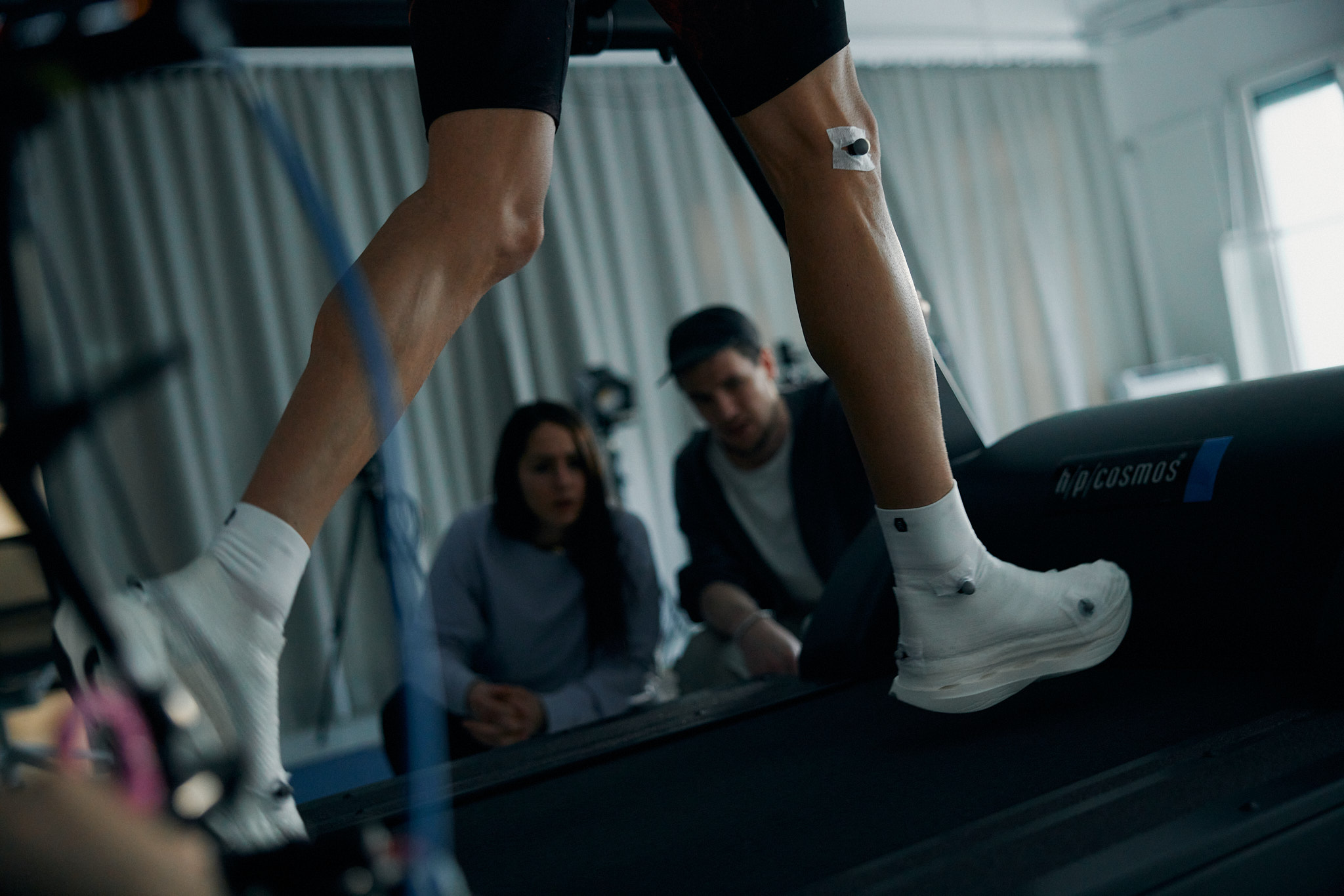
In the beginning, the reactions were mixed. Athletes, coaches, even managers were skeptical. A laceless race shoe felt radical, maybe even implausible. But a core group of early adopters believed in the concept, providing critical feedback that helped refine successive prototypes. When the technology finally made its debut at the 2024 Boston Marathon, Helen Obiri, wearing a prototype of the On Cloudboom Strike LS, ran to victory, sparking interest around a silhouette nobody had ever seen before.
Technically, the greatest hurdle within the process wasn’t design but physics. The filament’s viscosity had to be exact. The material, traveling through air before deposition, required precise temperature and flow characteristics to form stable layers. If it was too hot, it collapsed. If it was too cool, it wouldn’t bond. Many early trials failed. In the beginning, important mechanical components simply didn’t yet exist. Scalability was constantly questioned. What sustained the project was collective belief and persistence.
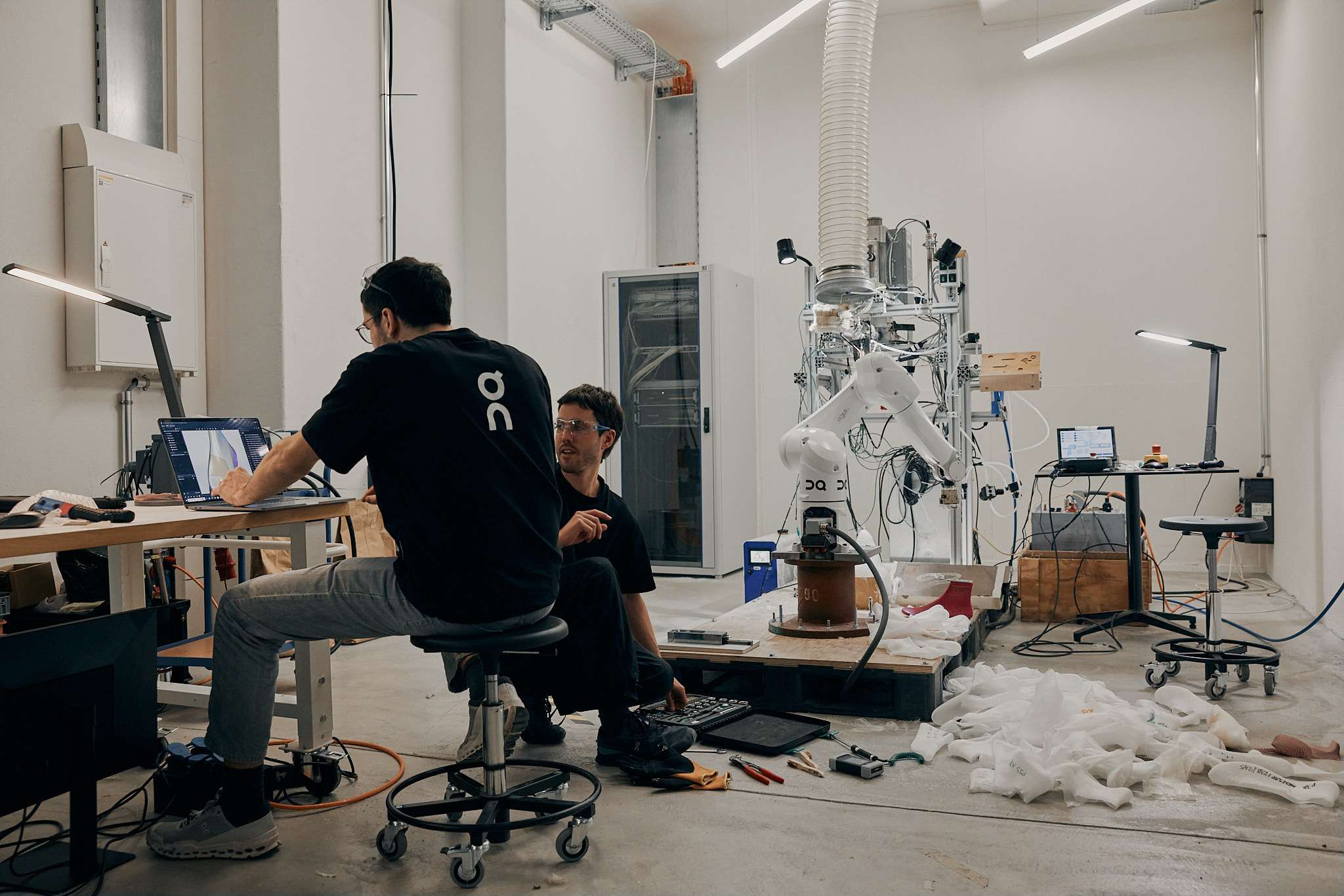
Because the upper is mono-material, it can be fully recycled - whether for a shoe or something else. While mechanical recycling may degrade polymer flexibility, reclaimed material can still be repurposed into other footwear components. Advanced chemical recycling could theoretically return the filament to near-virgin state.
From raw filament to finished upper in three minutes, vast sections of traditional footwear manufacturing disappear — reducing waste, water use, and emissions. Full circularity, however, requires system infrastructure. Johannes envisions a closed system, where products continuously re-enter automated production cycles. The technology seems to be here. What remains is cultural adoption. Runners, and the industry at large, need to be convinced that footwear can be reimagined, sprayed rather than stitched, and engineered rather than assembled. If that shift happens, the way we design and build performance shoes could change permanently.