
Another UTMB in Chamonix has come to an end, and once again, it was defined by records. As the event continues to grow, so does the criticism. APR MAG looks at UTMB’s evolution from a small local race into a global trail running highlight, the growing tensions around the event, and how its future in Chamonix could look like.
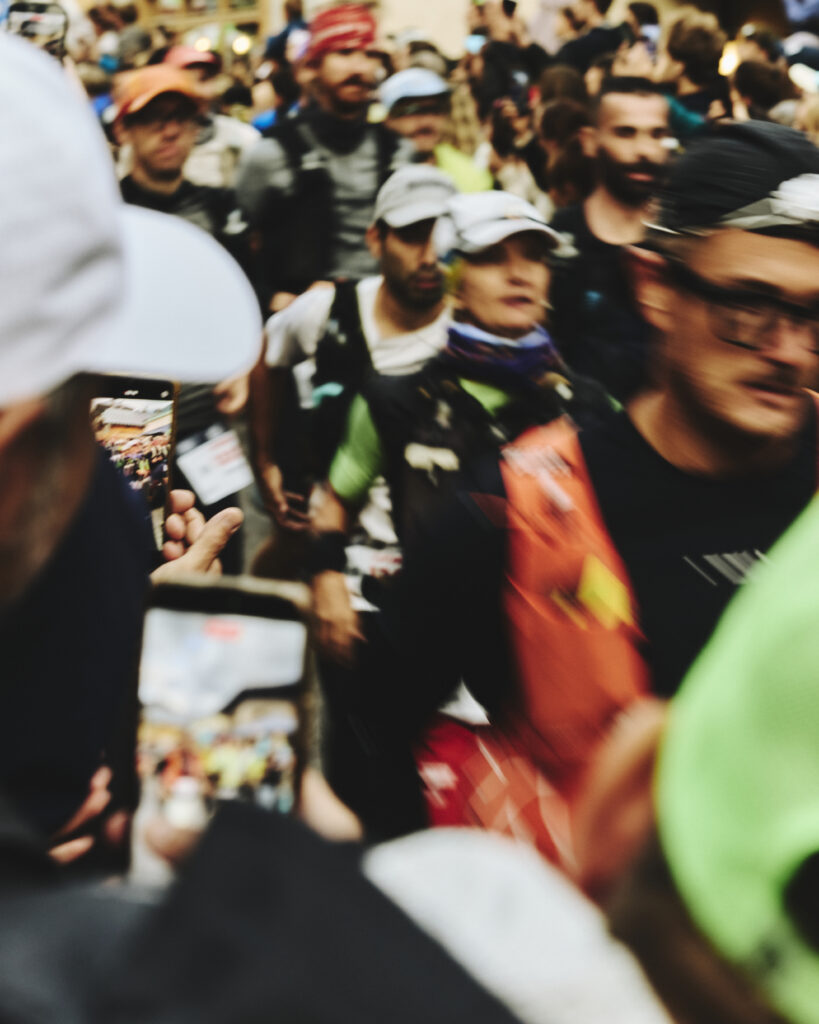
Another UTMB week has come to an end, and once again, it was defined by records. More runners, more spectators, faster times. What sounds like another highly successful edition, and plenty of reason to celebrate, is being met by increasingly vocal criticism.
UTMB, short for Ultra-Trail du Mont-Blanc, is an ultramarathon around the Mont Blanc massif. Runners cover approximately 170 kilometres and 10.000 metres of elevation gain within a 46.5-hour time limit, crossing three countries along the way: France, Italy and Switzerland. When Catherine and Michel Poletti organised the first edition in 2003, 711 runners lined up - only 67 made it to the finish. The myth of UTMB was born.
Today, UTMB has become a global brand. What started as a single race has evolved into a series of events, a trail running circuit with more than 60 races across five continents. Since The IRONMAN Group came on board in 2021, the UTMB Group has expanded aggressively. From 25 races in 2022, the series grew to 51 races by 2025. Still today, its grand finale remains UTMB Mont-Blanc in Chamonix.
The Ultra-Trail du Mont-Blanc is only one of mulitple races throughout the week in Chamonix. The programme also includes CCC (Courmayeur-Champex-Chamonix), PTL (Petite Trotte à Léon), TDS (Sur les Traces des Ducs de Savoie), OCC (Orsières-Champex-Chamonix), YCC (Youth Chamonix Courmayeur), MCC (De Martigny-Combe à Chamonix) and ETC (Espace Trient-Cimes). Offering multiple distances, however, is nothing new. Even the inaugural edition featured two additional races alongside the original course: a 110-kilometre race and a shorter 67-kilometre distance.
Today, participating in UTMB is far from easy. The UTMB Group has created a self-sustaining qualification system, built around two key elements: the UTMB Index and Running Stones.
The UTMB Index is a ranking system that evaluates runners based on their performances across comparable race categories. To enter the lottery, runners need a valid UTMB Index in the same race category. Running Stones can be earned by completing UTMB World Series races, with each Stone translating into an additional entry in the lottery. The more Stones you collect, the better your chances of securing a place at UTMB, encouraging runners to participate in more events across the series. Elites don't need to participate in the lottery, they can enter by meeting the relevant performance criteria and qualify directly.

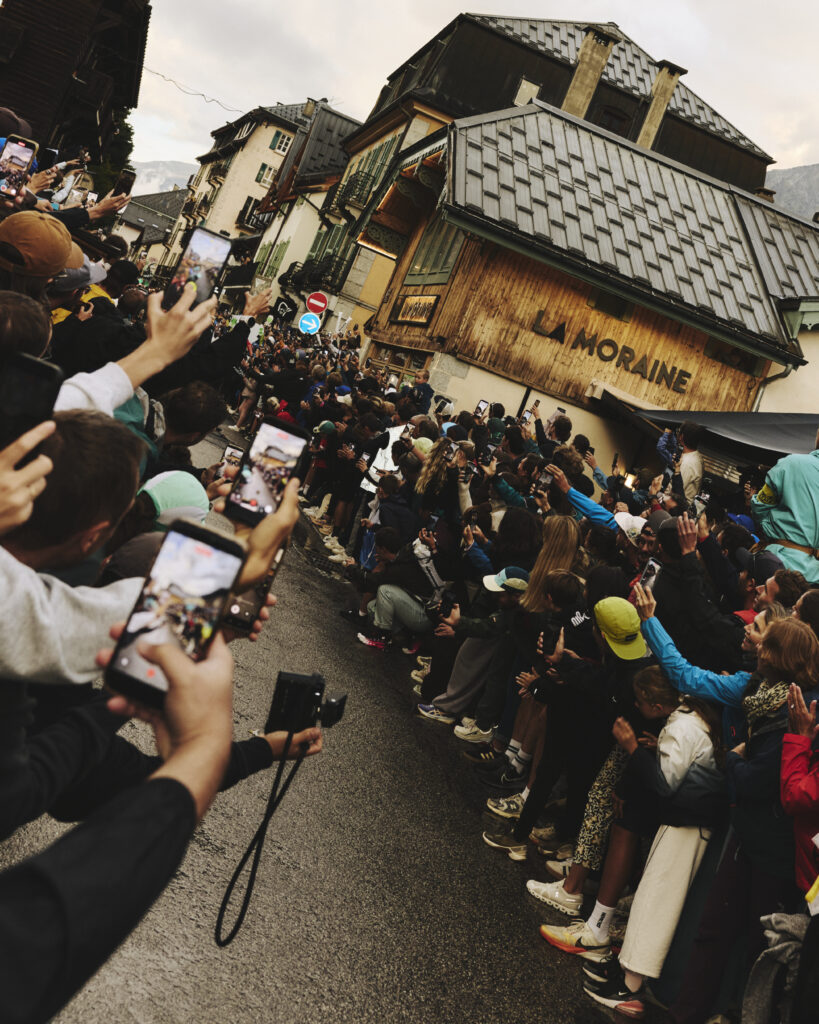
This year, the number of participants was being capped at around 10.000 - more than 29.000 people signed up for the lottery. In race week itself, around 100.000 people came to Chamonix. For a small town of less than 9.000 residents, that's a lot to absorb. Critical voices within the local community are growing.
In an interview with French sports newspaper L’Équipe, the newly elected mayor François-Xavier Laffin put it plainly: “A large majority of Chamonix residents despise this event.” The message is clear: something needs to change.
Concerns around the UTMB Group’s rapid growth are nothing new. In January 2024, an email from Zach Miller and Kilian Journet was leaked, in which the two encouraged fellow top runners to consider another event as the highlight of their season. Their concerns centred around UTMB’s rapid expansion and a number of decisions they felt were neither ethical nor respectful towards the trail running community. Following a joint meeting with the PTRA, however, all parties agreed on one central point: any further growth would need to happen in a more sustainable way.
The question, now, is how Chamonix and UTMB can move forward together. It is obvious that both benefit from one another. The UTMB World Series is built on the race around Mont Blanc and therefore remains deeply tied to the region, while Chamonix relies heavily on tourism and its revenue. And yet, UTMB's growth appears to have reached a point where the balance is beginning to tip.
As one of his first moves in office, the new mayor restricted the UTMB Brand Village to Place du Mont-Blanc, preventing it from expanding further into town. A decision that, understandably, was not welcomed by the race organisers. Laffin, however, is far from being completely against UTMB, as the discussion might suggest. It's actually quite the opposite. As a passionate trail runner himself, he credits UTMB with inspiring him to take up the sport. He has even finished CCC, the 100-kilometre race from Courmayeur to Chamonix that has been part of the programme since 2006.
Despite his passion for trail running, he is convinced that UTMB needs to change. His vision is based on a balance between three key elements: the race itself, the spectators and the brands. One aspect point he takes particular issue with, is the growing number of unofficial races organised by brands alongside an already packed week. He also is calling for fewer participants, fewer or potentially no night races through protected areas, and even a limit on spectator numbers.
"Unfortunately, not everyone [...] has the same understanding of what it means to be in the mountains. It comes with a certain responsibility.”
Antoine Monnot
UTMB itself is addressing the issue with its “Trail Running is about Freedom. Not without Responsibilities.” campaign, emphasising the need to respect the environment and stating that every runner, spectator and crew member has a certain role to play. What should perhaps go without saying, now needs to be communicated explicitly.
Antoine Monnot, passionate trail runner from Zurich and 2026 UTMB finisher sees both, the ups and downs of the event: "The trails are changing a lot, the sport is growing. Part of that growth is, that it allows athletes to live from the sport and that more people enjoy being outdoors - that's great. On the other hand, this growth comes with excess that might not be sustainable in the long run. Unfortunately, not everyone coming to Chamonix in race week has the same understanding of what it means to be in the mountains. It comes with a certain responsibility." To Antoine, events like the UTMB could be great opportunities to educate more people on the responsibility that comes with spending time in the mountains. He himself did feel overwhelmed by all the noise. "It feels like the activations have gotten out of hand", he says, "but still it seems like many people really enjoy it."
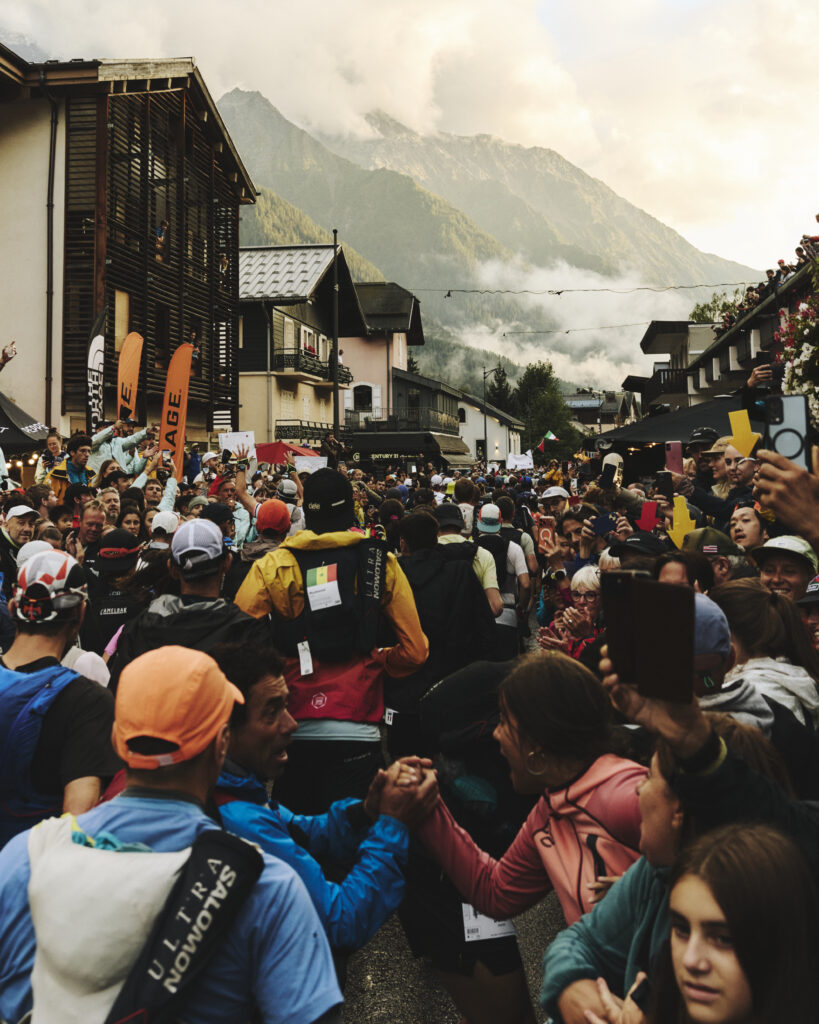
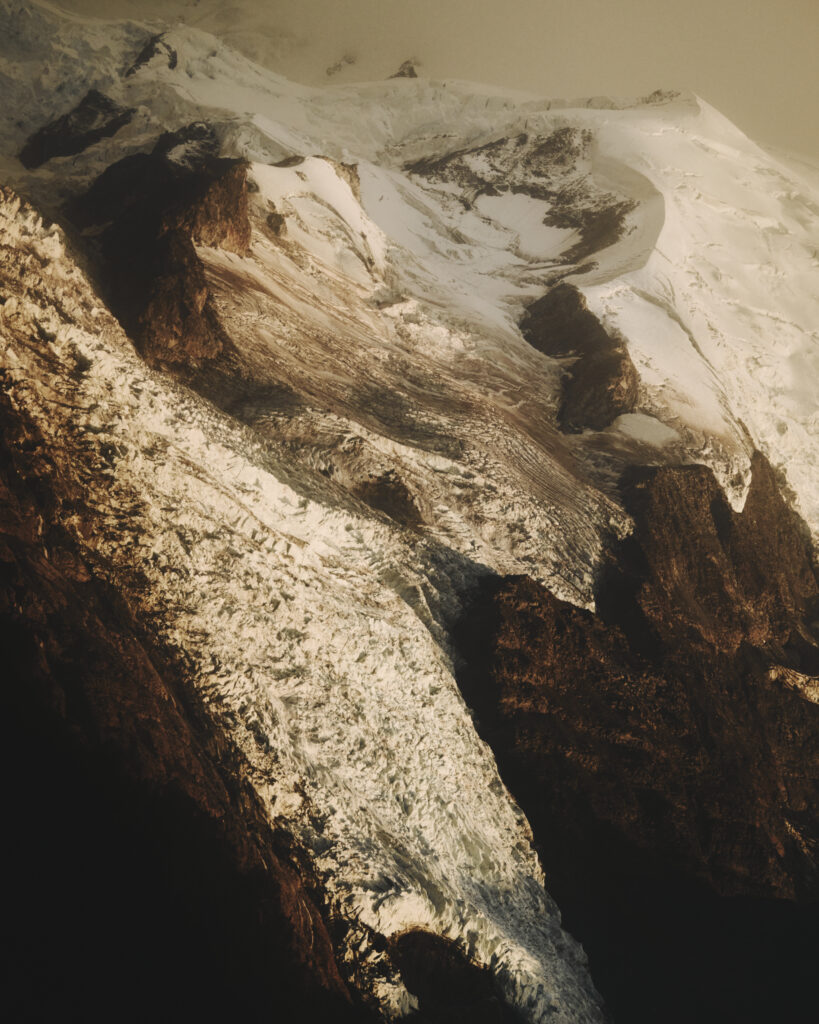
From a brand perspective, the desire to show up at UTMB and present new product in an authentic environment makes perfect sense. The global trail running footwear market is currently valued at close to $9 billion and is expected to reach $15 billion by 2034. It is hardly surprising that brands are doing everything they can to be part of that growth.
“The trail sport and its community are growing and with that comes change. There’s people that are not attracted by the race but by the activations around it. Brands can of course invite influencers, but why not make them help at an aid station?”
Patrick Stangbye
Coming to Chamonix for UTMB since 9 years, Patrick Stangbye has seen the event growing. What attracts him, is an iconic and truly spectacular race in which he can compete with the best athletes. The passionate trail runner and co-founder of Portal argues that for many brands UTMB seems more like an outdoor festival and that the people they invite aren't necessarily in town for the race.
Nonetheless, he understands why brands want to be present at such a global moment. “Brands can of course invite influencers, but why not have them help at an aid station?” he asks, encouraging brands to rethink their role and shift the focus back towards the race and its athletes.
UTMB has become a global business that, in many ways, appears to have outgrown its origins in the small mountain town of Chamonix. Starting from September, the mayor, regional representatives and race organisers will come together to discuss what the future of the event can look like. The mayor’s goal is clear: reshaping the event in a way that allows the local community to embrace it again. To take its next step forward, some form of stepping back seems inevitable for UTMB and Chamonix.
Isabelle Poletti, director of UTMB, has similarly stated that one of her key priorities is ensuring the event's future in the region. The newly integrated transport system, providing UTMB Mobility Shuttles and therefore banning cars for 80% of UTMB key course locations and in result reducing the total amount of cars on the road, seemed to have worked well this year.
Amid all the noise, the race itself does not seem to be the main point of discussion. Instead, it is the ever growing number of activations surrounding it that make the week feel increasingly busy, loud, and hectic. Two examples showed what a quieter approach that still allows for meaningful brand involvement could look like: Vibram FiveFingers and Bedrock Foundation.
FiveFingers hosted a live ambient set in the mountains, with guests listening through headphones while resting in nature. A moment of calm in a fast paced, performance-driven week. With Les Altitudes 1064, Chamonix-based studio Bedrock Foundation laid the groundwork for a mindful multi-brand space. Set in a local chalet, they created room for authentic activations rooted in the trail and mountain culture, while bringing guests, locals and the industry together for conversations around the race. To achieve the balance Laffin calls for, more activations like these could play a key role in finding common ground.