
Catherine Debrunner is a six-time Paralympic gold medallist, 10-time world champion, nine-time world record holder, and 12-time Marathon Major winner.
With an extraordinary record spanning every distance from the 100m to the marathon, she stands among the most dominant athletes of her generation.
APR MAG met Catherine at the Swiss Paraplegic Centre in Nottwil, Switzerland, shortly after her win at the 2026 London Marathon to talk about her beginnings as a wheelchair athlete, her move from the track to the roads, on balancing being a teacher and a professional athlete, and on how to find calmness in pressure.
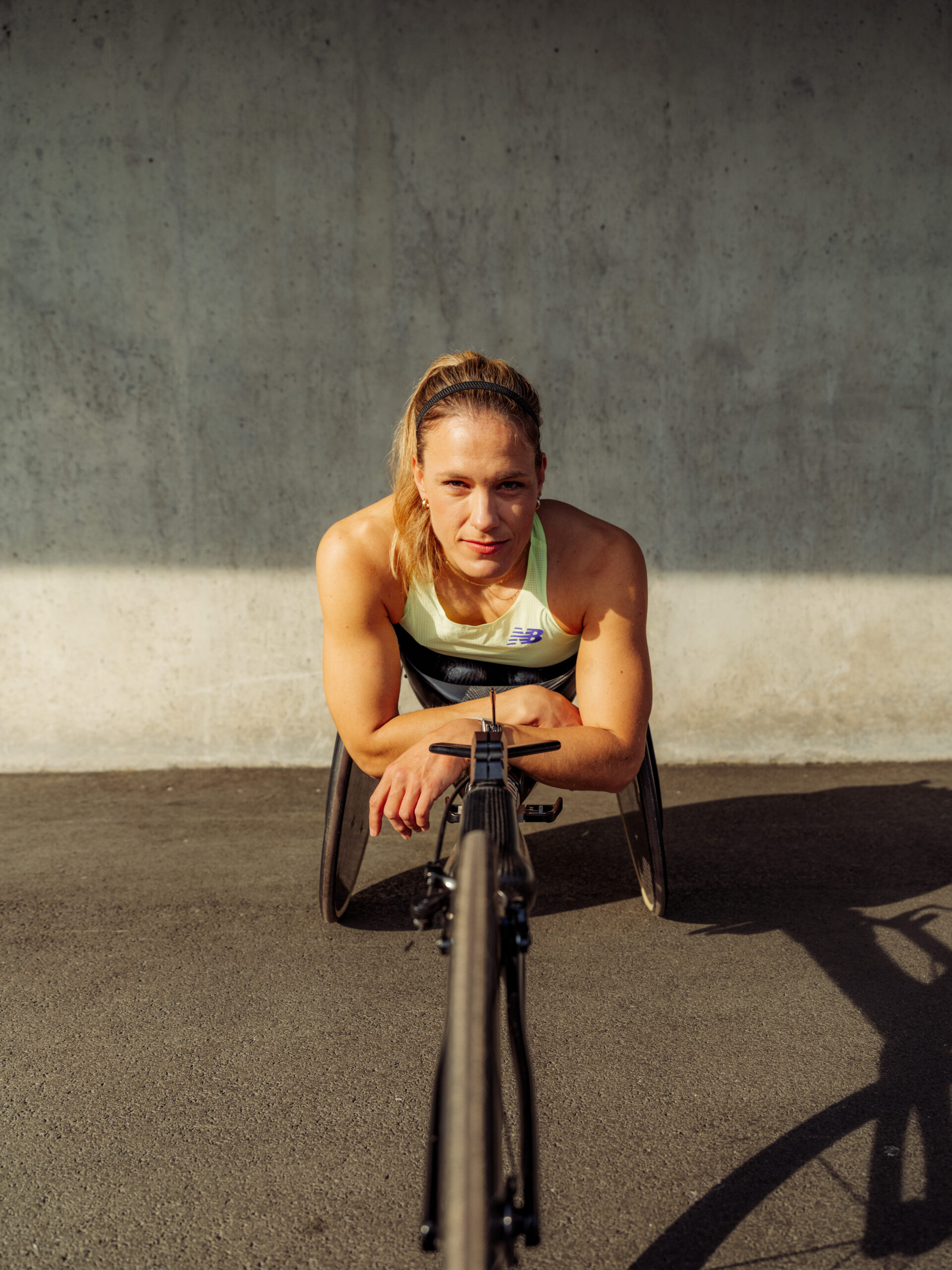
APR MAG:
Hey Catherine, we’re here at the Swiss Paraplegic Centre in Nottwil, the place where your career as a wheelchair athlete started. How does it feel to come back here?
Catherine Debrunner:
Coming back here fills me with a lot of gratitude. I still remember arriving here as a kid, I was eight years old, together with my sister to take part in the kids camp.
I’d always loved being active, always loved sports, and my parents thought it would be a good idea for me to try out all kinds of different activities, without any bigger intention behind it. Being surrounded by other kids who were also in wheelchairs always felt really special.
It was here in Nottwil that I first met Paul, my former coach, and he introduced me to the racing wheelchair. Marcel Hug, who grew up just in the next village over, was there, too. That’s really how it all started. I immediately loved the feeling of being in this fast wheelchair. Paul regularly came out to Eastern Switzerland at the time, so I found myself getting pulled into the sport pretty quickly.
Looking back now, I’m incredibly grateful that I even had that opportunity in the first place. The opportunities we have here in Switzerland are truly unique and I think that’s really important. My parents have never put any pressure on me, they just wanted me to have fun. The idea that I would one day become this successful or build a career like this was never really part of it. I was simply a little girl who loved to move.
So yeah, being here brings back such beautiful memories. I’m genuinely grateful for what we have in Nottwil - the fast track, the sports medicine facilities, the foundation that supports us in so many ways. There really aren’t many places like this in the world.
APR MAG:
You raced the Boston Marathon ten days ago, and just six days later you were back at the start line for the London Marathon, you were incredibly successful in both races. What have the last ten to fourteen days been like for you?
Catherine:
Overall, it’s been really exhausting. Beyond the two marathons themselves, it’s especially the travelling that I feel the most. Travelling doesn’t come easy to me, we often have a lot of luggage and I mainly travel on my own.
Boston is a really long flight and there’s also the time difference. The course itself is also very challenging. There are many downhills and we reach really high speeds.
Going straight from the US to London and being able to put Boston behind me relatively quickly, mentally file it away, and fully shift my focus onto the next race - all of that takes a lot of energy and is emotionally demanding.
This was the second year I’ve done it this way so luckily I was able to draw on my experience from last year. In those six days in between, recovery is the absolute priority. Sleeping, eating well, staying hydrated, basically a minimal programme.
APR MAG:
You mentioned the strategy you’ve developed between the races, almost putting Boston into a drawer for the time being, so you can mentally close that chapter.
Catherine:
Not completely close the chapter but at least put it somewhere safe for the moment. I’ll still process both races together with my psychologist now. This reflection is really important to me.
We already knew beforehand that the turnaround would be very short, so I had to allow myself to enjoy the moment, to be proud of what I had achieved, and then place Boston into that drawer for a while.
My thoughts don’t disappear, but it feels as if they’re safely stored away for the time being so I can fully focus on the next race. That metaphor genuinely works very well for me.
APR MAG:
You’ve just raced two marathons, and your next competitions will take you back onto the track. What does the marathon give you that you don’t find on the track?
Catherine:
That’s a mean question (laughs). I genuinely enjoy both. I’ve been doing track competitions for much longer, whereas I only started racing marathons in 2022.
It’s actually kind of funny, Manuela and Marcel have been doing marathons for such a long time, and I always used to wonder what it was that fascinated them so much about it. Manuela always used to say that the marathon world was much more professional and just cooler overall, and I kept wondering what exactly she meant by that. But once I started racing marathons myself, I understood it pretty quickly.
The visibility, the media attention, the appreciation we receive in marathon racing, and also the sheer number of spectators. It’s a completely different world compared to our track competitions. If we’re being completely honest, hardly anyone is interested in our track competitions. Even local football tournaments draw bigger crowds.
At our world championships in New Delhi last year, we barely had any spectators, hardly anyone even noticed it was happening. I won five gold medals, came home, and didn’t do a single interview. For my marathon season, that was probably a good thing because it meant I could recover in peace but of course it still hurts.
The London Marathon had 59,000 participants, the media attention was huge. Even our press conference took place in the same setting and even together with the runners. So the marathon world is completely different. When I won London, it was all over the news thirty minutes later. That’s pretty special. Thinking of my sponsors, there’s much more visibility in marathon than on the track. The whole atmosphere is just different.
Also, London Marathon is really leading the way in terms of price money. Us wheelchair athletes get the same prize money as the runners. As an example, at the last World Championships, despite winning five gold medals, I didn’t earn a single cent apart from what came from my sponsors. That’s pretty crazy when you think about it.
At the end of the day, this is my sport, and I want to make a living from it. The opportunities in marathon racing are just completely different. Of course, a lot depends on results, but still, in so many ways, the marathon scene is far ahead of track racing. It’s a little bit sad, because I genuinely love track races, but the marathon is simply on another level in terms of inclusion and equality. It’s just further ahead, the difference is enormous.
APR MAG:
If these two worlds, the track and the marathon, are so different, the transition from the track to the road probably was very challenging?
Catherine:
Absolutely. At times, it almost felt like I was learning a completely new sport. Looking back now, that’s becoming clearer and clearer to me.
On the track, everything is much simpler. You have a 400-metre lap, you know exactly what’s coming - a straight, a curve, another straight and another curve. The curves are always the same, the radius never changes. There are no speed bumps, no uphills and no downhills.
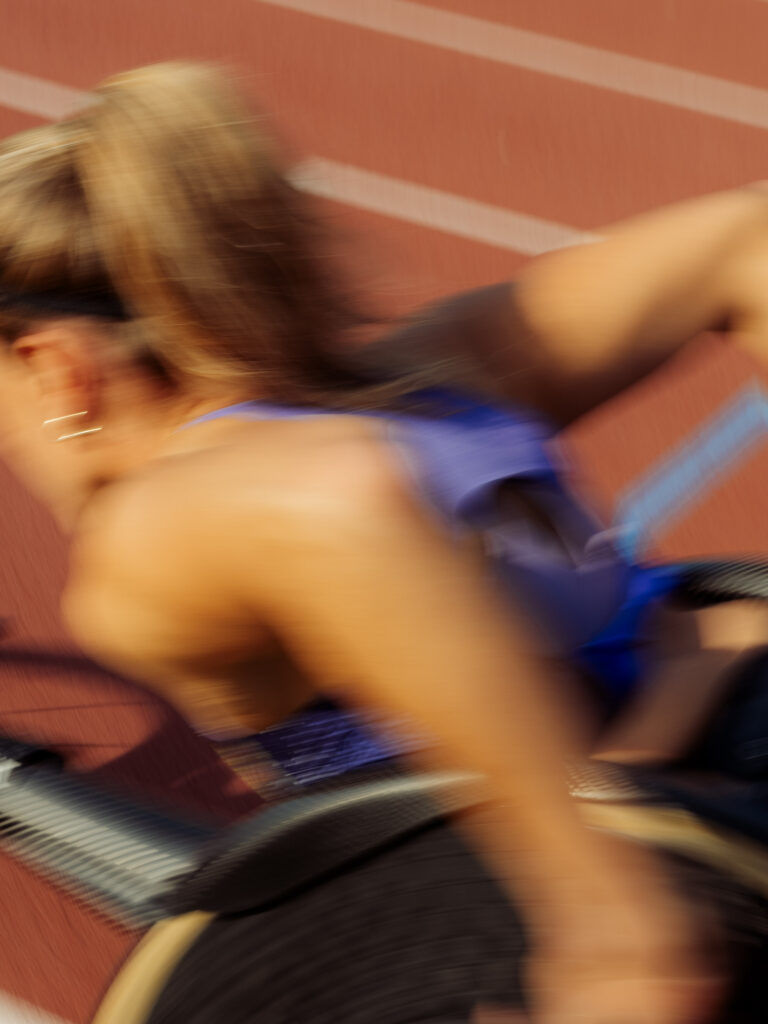
Especially in the beginning, I really struggled with the corners in marathon racing. Still today, going downhill takes a lot of courage for me. We’re getting so fast, the fastest woman in Boston reached 67 km/h. I’m still learning to let go of that fear, together with my psychologist, and to fully trust myself and my wheelchair. There’s also the distance itself, of course, which is a huge challenge. That was the first major hurdle for me.
Once I realised that it I could actually race 42km, I wanted to learn how to take corners properly, how to handle downhill sections well, and how to deal with potholes, speed bumps, and all the other obstacles you encounter on the road.
Marathon racing is just much more complex than track racing. Don’t get me wrong, I don’t want to downplay the track at all - on the track, especially in shorter races like the 800m and 1500m, tactics for example are incredibly important.
But it’s marathon that has genuinely helped me grow. I’ve learned how to get more out of myself, I really had to step out of my comfort zone which often is the best learning experience there is.
Since I started racing marathons, I’ve also become significantly better on the track. And beyond that, I’ve grown enormously as a person, too.
There’s something almost mythical about the marathon distance and I think that’s exactly what makes it so fascinating. You go through so many different phases during a race. Sometimes you feel like you can’t keep going anymore, you convince yourself that you’ve reached your limit and then, once you cross the finish line there’s this incredible feeling. It’s strangely addictive, a very special experience.
APR MAG:
You spent many years working as a primary school teacher alongside your athletic career - how did you balance being an athlete and a teacher?
Catherine:
Yes, that was until 2022. At the Paralympics in Tokyo, I was still working as a teacher. My coach always says that I used to be very good at squeezing everything in somehow.
What my current coach really taught me is to fully focus on training and having a consistent routine, training every morning from 9 to 11 and in the afternoon from 2 to 4. Now, training is the centre of the day, everything else gets planned around it.
On days like today, training gets cancelled completely. My coach doesn’t like squeezing in sessions, instead I should focus on rest, downtime, and recovery. In the past, I probably would have trained in the afternoon on days like today and it probably would have worked out somehow, but I definitely wouldn’t have recovered enough.
Looking back now, I’m really glad I took that step - I’ve gained a lot of freedom. I was quite afraid of fully focusing on racing, especially because of the financial risk. Back then I wasn’t racing marathons yet, so my income depended entirely on my sponsors. But honestly, at a certain point I also felt as if I could no longer give my pupils the attention they deserve.
APR MAG:
Are there aspects of working as a teacher that you miss?
Catherine:
There was a certain sense of routine and stability. Knowing that you’d receive a fixed income every month, without the pressure of having to win races gave me a sense of security.
Especially in the beginning, when I decided to fully commit to sport, I was earning very little and somehow just had to learn to live with that. I think that’s probably something a lot of self-employed people can relate to as well. It was a real learning process for me.
Now, thanks to my success, I’m in a different place, but developing that trust in myself was a real learning process.
All the administrative aspects that come with being self-employed were completely new to me as well. I honestly learned a lot during that episode.
APR MAG:
You mentioned pressure, pressure to win races so you can make a living. How do you deal with that, especially considering that in almost every race you participate in you’re seen as the favorite?
Catherine:
I honestly wish it wouldn’t be, but of course there is pressure. Last week in London, I put a lot of pressure on myself because I’d already won the race four times.
Pressure is a central part of every athlete’s life. We just have to find a way to deal with it and develop a certain sense of calmness around it. Last year, I missed the world record by just two seconds. That became quite a big story this year, so the world record was a big topic. That’s a lot of pressure. There are so many parts that need to come together for a fast marathon.
I once read a quote by Marco Odermatt, the Swiss skier. He said, ‘Pressure is a privilege’, meaning that, in a way, he himself is responsible for the pressure he feels because he’s already achieved so much. I really try to live by that although of course, it’s much easier said than done. I still get incredibly nervous before races, and the more races I win, the higher the expectations become.
In the beginning, you’re happy about every podium finish, and then at some point you reach a level where a second place doesn’t feel completely satisfying anymore, even though it’s still a really strong result. Every now and then, I have to put that back into perspective and almost tell myself to stop, to acknowledge what I’ve achieved. In the end, a high level of competitiveness within the field is what we want.
What really helps me is stepping out of my routines, talking to friends who have absolutely nothing to do with athletics, or spending time with my family, where I’m simply just Catherine. Doing things that have nothing to do with competition helps me enormously, whether that’s gardening, listening to music, or spending time with my family.
APR MAG:
Let’s talk about your equipment for a second. How does your racing wheelchair differ from your everyday wheelchair??
Catherine:
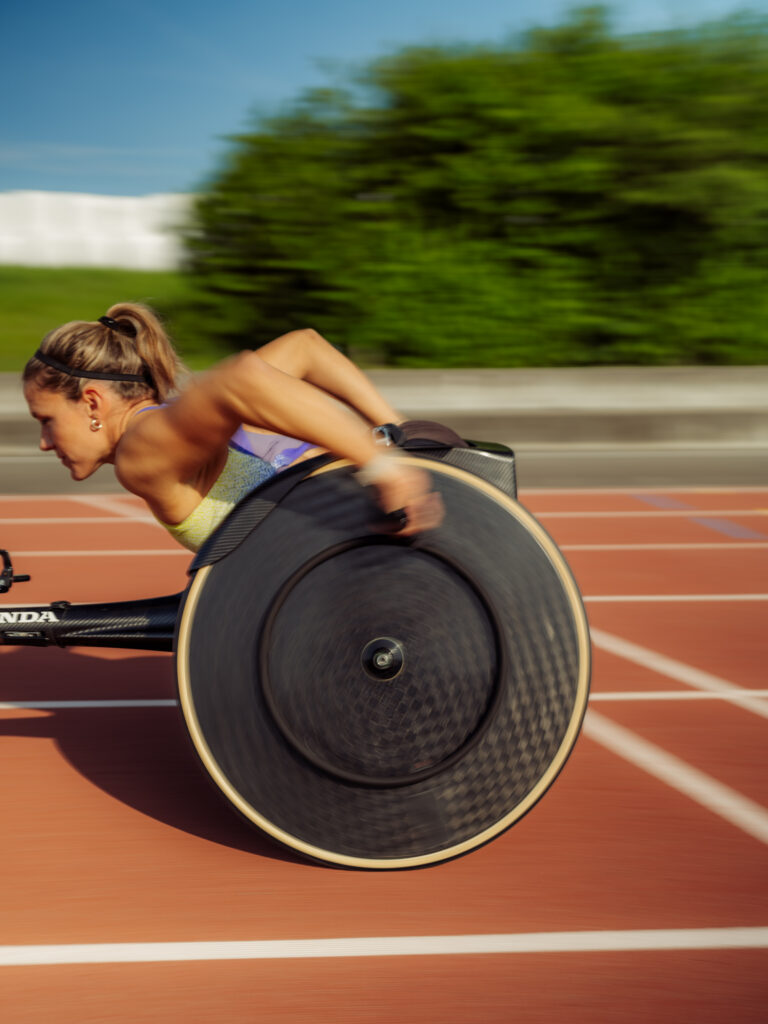
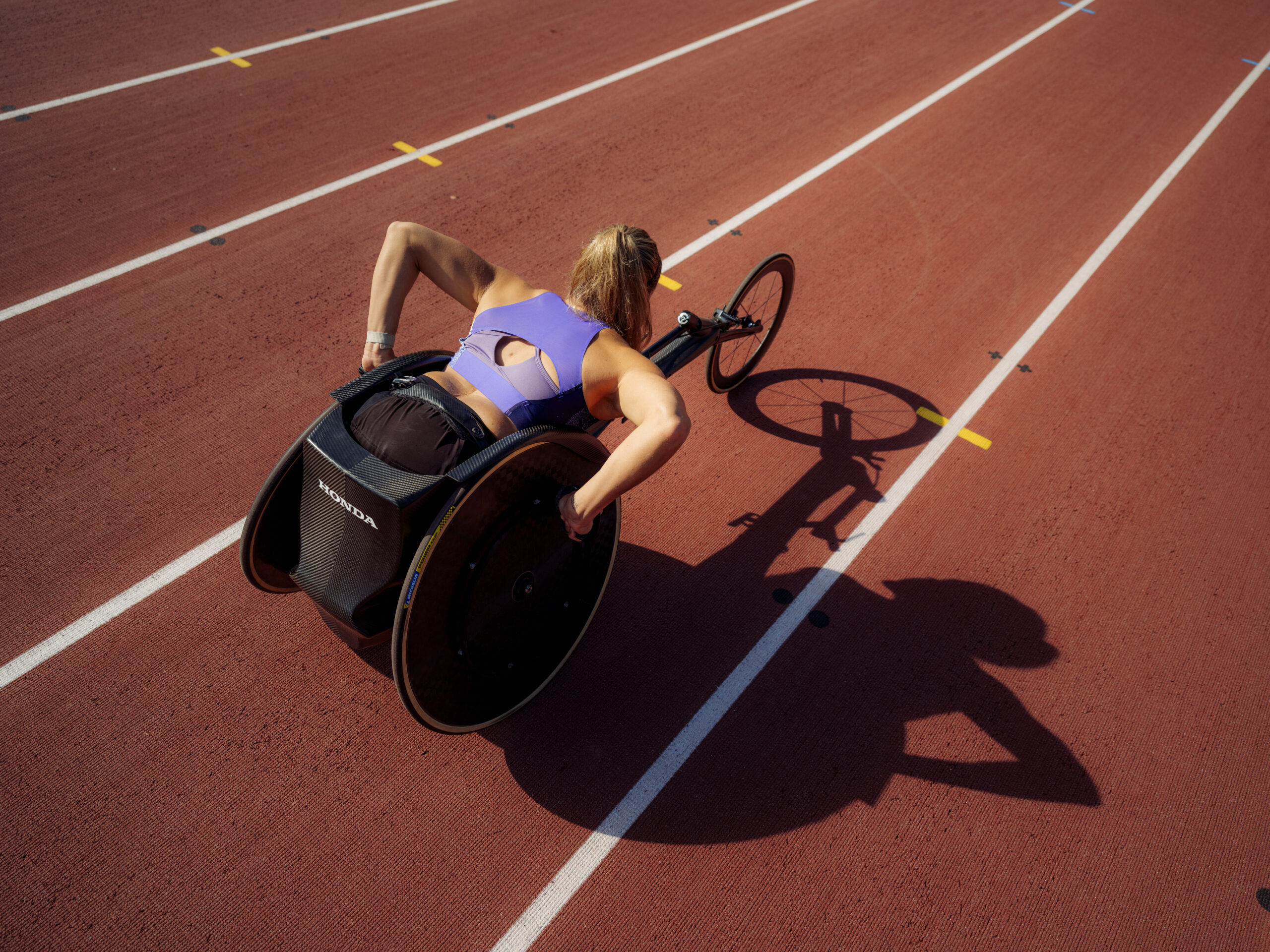
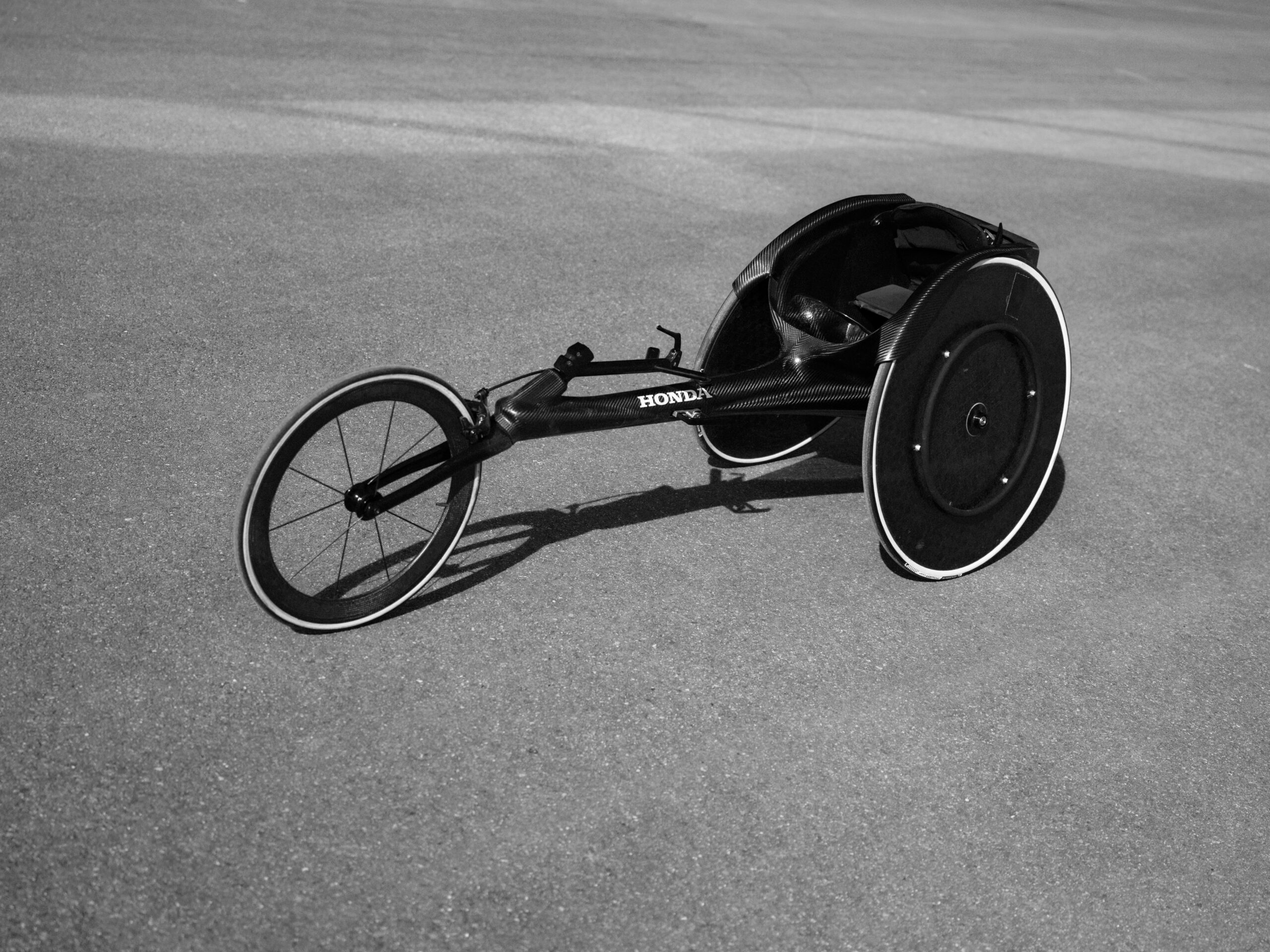
If you break it down very simply, the racing wheelchair has three wheels, my everyday wheelchair has four. The seating positions are completely different. In my everyday chair, I sit upright, whereas in the racing wheelchair I’m positioned kneeling forward.
For athletes who still have sensation in their legs, this position can be quite uncomfortable, but I don’t have feeling in my legs.
The racing wheelchair is made entirely out of carbon fibre and also has a very different shape.Compared to my everyday wheelchair, the racing chair is much more elongated, with the front wheel positioned much further out in front. The wheels are also slightly angled, which isn’t the case with an everyday wheelchair.
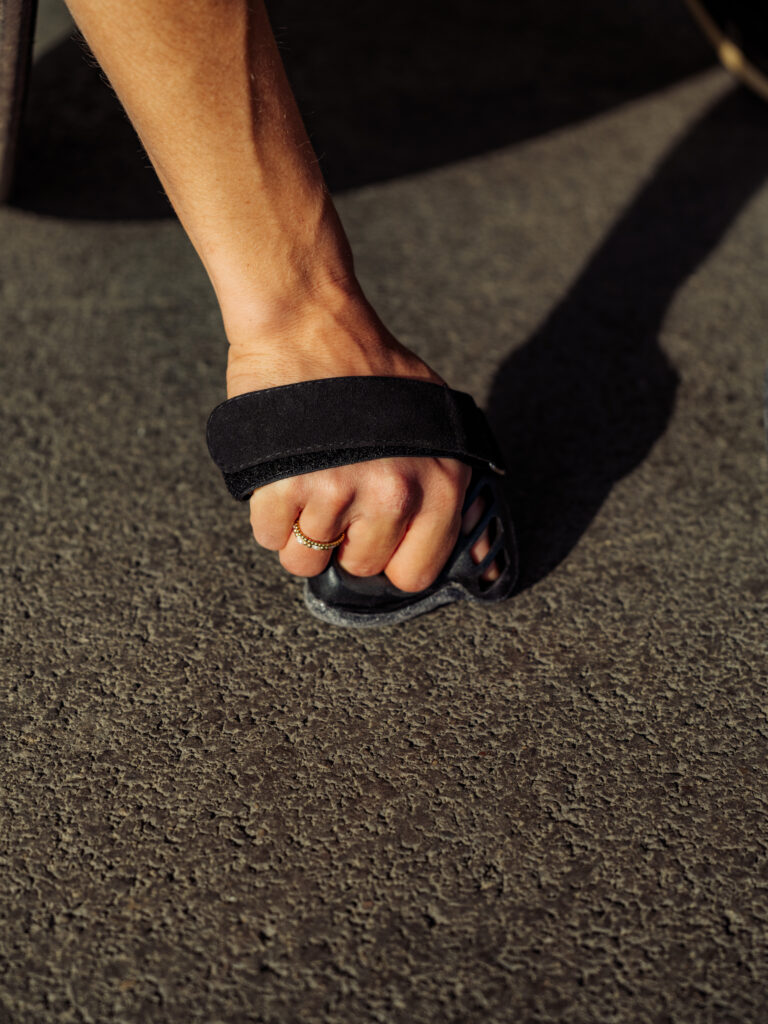
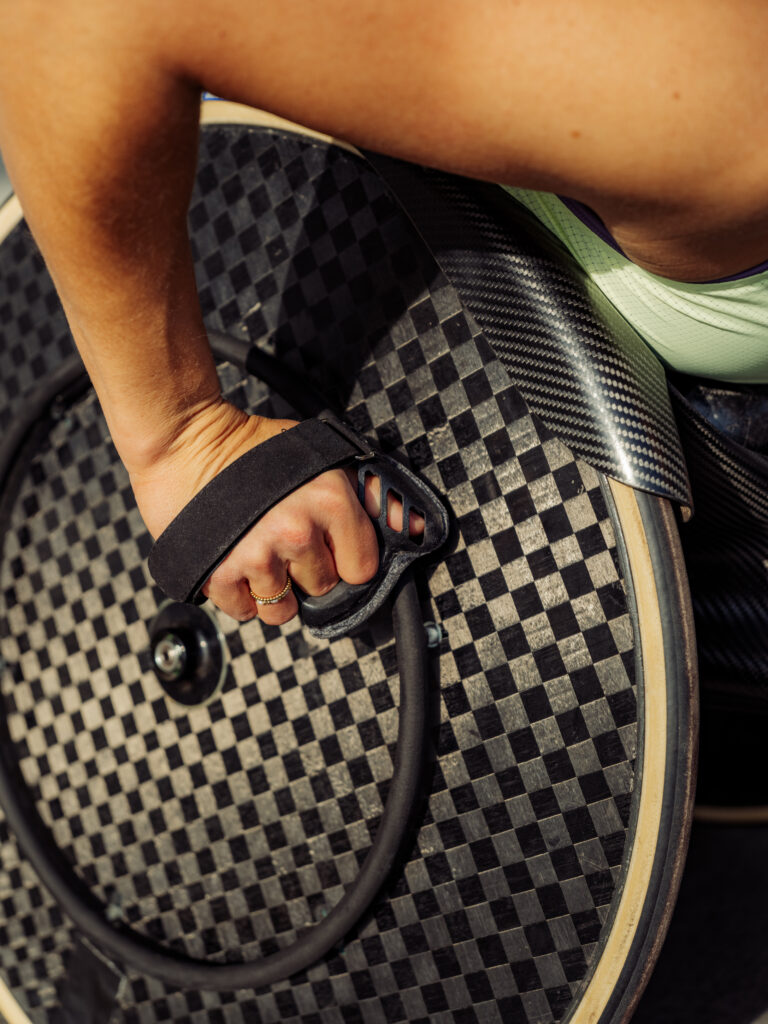
Because of my position and the movement itself, where I strike the handrims with my gloves, I’m able to reach very high speeds in the racing chair. In an everyday wheelchair, you propel classically with your hands, whereas in a racing wheelchair it’s much more of a striking motion.
My Honda racing wheelchair is custom-made for me down to the millimetre. Everyday wheelchairs come in standard sizes and aren’t tailored nearly as precisely. Racing wheelchairs are truly high-tech machines.
APR MAG:
How does that development process for a racing wheelchair work?
Catherine:
I am very lucky to be a Honda ambassador. Of course, when they approached me, I said yes immediately, and not long after that I travelled to Tokyo. It was really impressive.
The people at Honda are real obsessives, in the best possible sense. They truly live for wheelchair racing. Some of the conversations we’d have would last thirty minutes and revolve entirely around half a millimetre. That was a new dimension for me, I’d never experienced that level of precision before. They scanned me from head to toe. And when I finally received the wheelchair and got to sit in it for the first time, I was honestly blown away. It fit perfectly.
In the past, I always had to add extra padding or make small adjustments to get the chair to fit properly. This feeling of the wheelchair fitting like a second skin gives you an incredible amount of confidence.
APR MAG:
Does that same level of individualization also exist in other areas, for example when it comes to clothing?
Catherine:
Yes, definitely. We also wear outfits that fit very closely to the body.
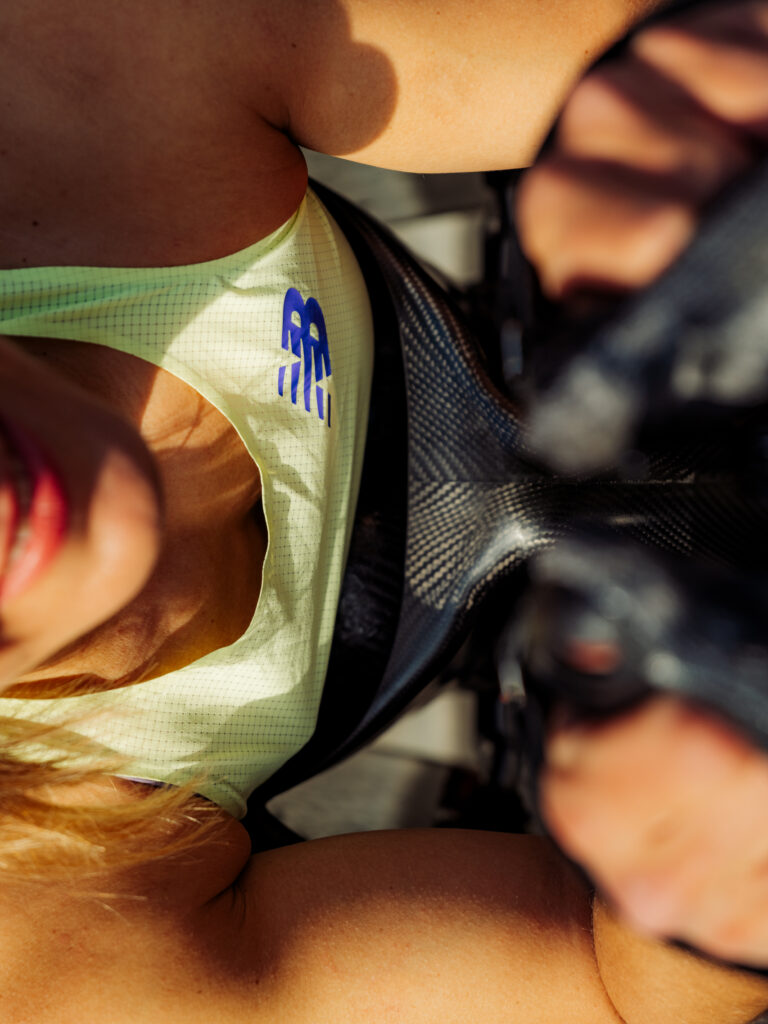
New Balance created a race kit for me especially for London Marathon that fits me really nicely. In this area, there is still room for improvement though.
APR MAG:
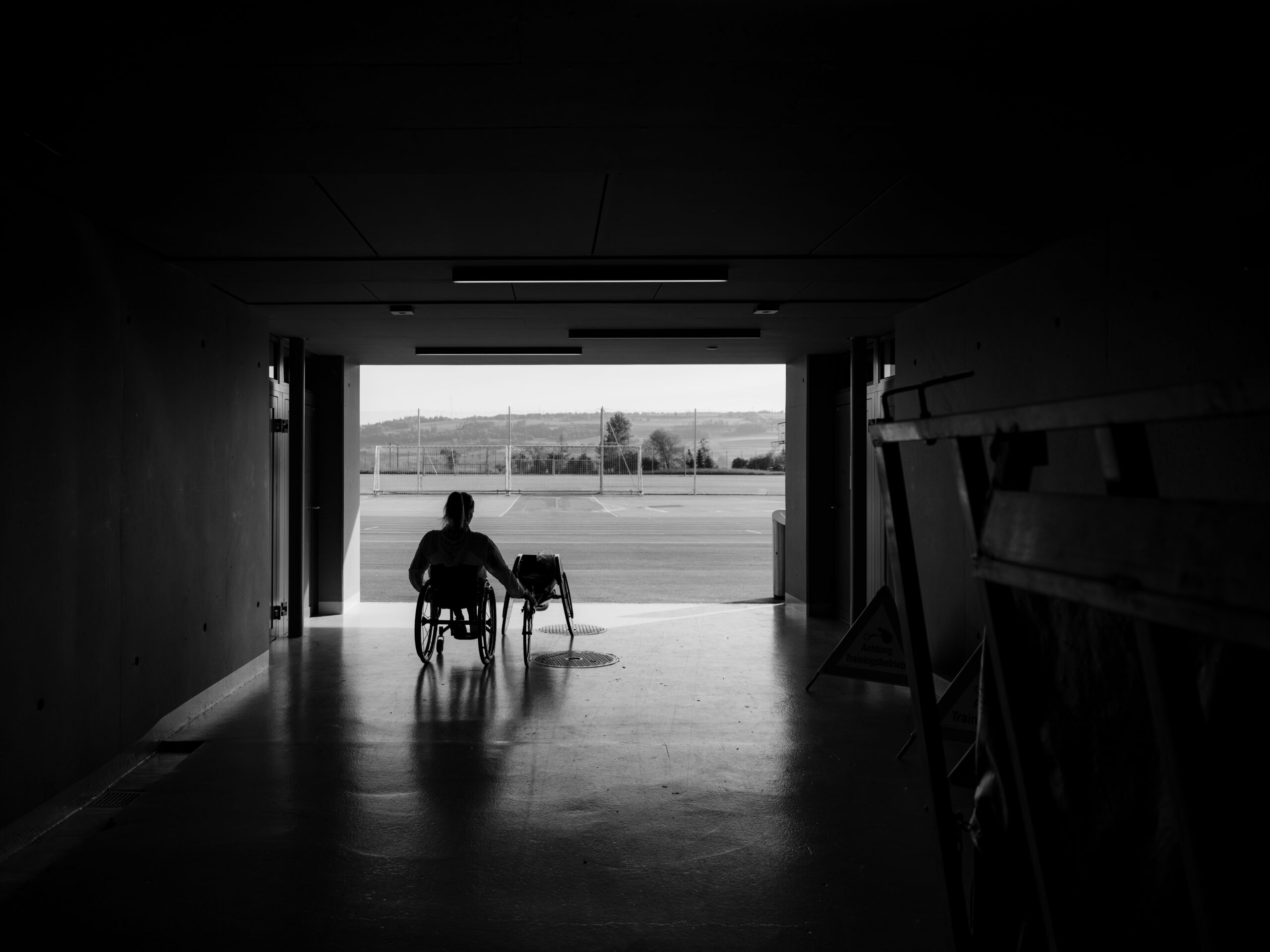
Here in Nottwil, your indoor-trainer is right next to those of your fellow Swiss athletes Marcel Hug and Manuela Schär, two other very successful athletes. In general it’s striking, how dominant Switzerland is in wheelchair racing. What’s the secret behind your success?
Catherine:
I honestly think the fact that our spots are next to each other is probably just coincidence (laughs). But this facility here in Nottwil is definitely a major factor, because we truly have everything an athlete could need in one place. The infrastructure, the sports medicine, the foundation, all of it. The financial resources we have in Switzerland are also an advantage.
There are camps for children in wheelchairs, where they can try out different sports. That helps discover talent and introduce kids to sport at an early stage. These projects are incredibly important.
And of course, I think the three of us have also inspired each other along the way. Marcel always showed me what was possible. And Manuela too, especially as a woman. She inspired me enormously, both in the marathon and on the track. She was so dominant and successful, and also such an independent person who travelled a lot on her own. That really impressed me. Having Manuela as a role model helped me a lot.
APR MAG:
Talking about role models - when you think back to your own beginnings, what is it that you would want to pass on to kids today, whether they’re in a wheelchair or not?
Catherine:
That’s a difficult question (laughs).
What’s really important to me is teaching children that even though we live in a performance-driven society, where everything is supposed to be perfect, it’s okay to be ‘normal’. Not everything has to be perfect. That also applies to the expectations we place on ourselves: every single one of us is unique.
Whether you have a big nose or a toe that’s a little smaller, you’re good the way you are. I think that’s especially important when thinking of social media. We’re constantly encouraged to compare ourselves to others, even though what we see on there is not reality.
I want kids to feel proud of themselves and to genuinely like who they are. I want them to follow their dreams and to have the courage to try new things. I also want them to learn that failure is part of life too, that sometimes things don’t work out, and that’s okay as well.
In the end, it’s about having fun and really enjoying life. Especially for those of us who get to live in Switzerland and have a very privileged life. We should be aware that this isn’t something to take for granted, and we should appreciate what we have. Too often, we see the glass as half empty instead of half full.
A while ago, I started writing down three positive things in a little journal every day, three moments of happiness. It can be something as simple as a really good coffee or spending time in the sun, small things that made my day. Happiness isn’t always a new expensive bag or a luxury holiday, it lives in the little things.
APR MAG:
Beautiful, thank you Catherine.